Pages

Showing posts with label Pato Branco. Show all posts

Tuesday, 16 May 2017

Protecting the Animals of Pato Branco

Since moving to Brazil, I have spent a lot of time driving between Pato Branco and Curitiba, along with various other car journeys.  On these journeys, it is not uncommon to see stray dogs by the side of the road, sometimes sleeping, sometimes wondering lost.  Apparently, there are people that get tired of having a dog (or other reasons – I honestly can’t work out what goes on in these people’s minds) that just release (that should be, kick out…) a dog at the side of the road.  Even worse is seeing a dog stranded in the central reservation, with no way of getting food without braving the fast moving, continuous stream of traffic.  I have seen a lot of these strays and it’s a sight I hate seeing – I can’t understand why anyone would treat an animal like that.  My wife and I have often said that if we had a farm (or if we had money) we would love to be able to take in these stray dogs so that they would have a chance in life.

Recently, we found out that someone has done just this.  Seu Lima has a sanctuary just outside Pato Branco where he takes in stray dogs, cats and even monkeys.  Amazingly, he does this without any assistance from the city, even though he is performing a valuable service by giving a home to stray dogs and cats in the city.  When we visited him, we were greeted by a cacophony of dogs barking and seu Lima came out to meet us.  We were immediately taken by his friendly nature and the love for his animals which was clear from the way he spoke.  


Zico holding my hand
He introduced us to Zico, a monkey that, between mouthfuls of watermelon, likes to hold hands with people!  When I reached out a second hand, he took it in his and started excitedly jumping up and down!  He then spotted a tempting rubber attachment hanging off my camera, snatched it away and proceeded to (try) to chew it!  Eventually he gave up on it and abandoned the rubber in favour of a more tempting courgette.  I guess he felt bad about it because he gave me a piece of courgette when I returned!

Seu Lima then took us on a tour of the sanctuary.  He petted each of the dogs as we passed, with a story about most of them.  They were generally kept one or two dogs to a pen and we were impressed with how clean each pen was, despite the huge number of animals.  Most of the dogs (at least those that have spent some time there) appear well fed and in good spirits, although many show signs of the abuse or neglect the suffered prior to their rescue – one fled to the roof of her kennel as I passed and, clearly shaking, urinated in fear.  We also saw animals that with amputated limbs, missing eyes and other injuries and health problems.  Seu Lima told us about the first dog he rescued, who was abandoned at the side of the road and someone had thrown either hot water or hot oil at him.  In some ways, it was horrible to see the state of some of the animals, but at the same time, I was glad that they were being fed, sheltered and very well cared for.


For more information, to find out about adopting a dog or to donate, more information is available (in Portuguese) at the website for the Associação Lima de Proteção aos Animaisde Pato Branco  or at https://www.facebook.com/alpapb/

Seu Lima with the second dog he rescued and one of the assistants

Friday, 31 March 2017

Pato Branco

Pato Branco from the air, the yellow church is in the
middle of the shot
I must correct a terrible omission…  I have a blog about Brazil but have not written about the one place in which I have spent more time than anywhere else in Brazil – Pato Branco!  I have been coming here since December 2008 and have lived here since December 2015, how could I have missed this place?!

You can be forgiven if you have never heard of Pato Branco, it is a relatively small city deep in the countryside of southern Brazil.  With a population of just under 80,000 people, it is considered to be the capital of Southwest Paraná, one of the 3 southernmost states in Brazil.  I should point out that residents of neighbouring Francisco Beltrão (the “little city” is actually a bit bigger than Pato Branco, with a population just under 85,000) do not necessarily share this opinion, so I’ll move swiftly on. 


Where is Pato Branco?  From Google Maps
Pato Branco (meaning White Duck in English) is a very young city, marking its 65th birthday in December 2016.  It started life as a colony called Colônia Bom Retiro, founded in 1918 to resettle people unsatisfied with the result of a border dispute with the neighbouring state of Santa Catarina.  The name Pato Branco comes from a telegraph station Posto do Rio Pato Branco (station of white duck river) and people began to refer to the region as simply Pato Branco, becoming official in 1938.

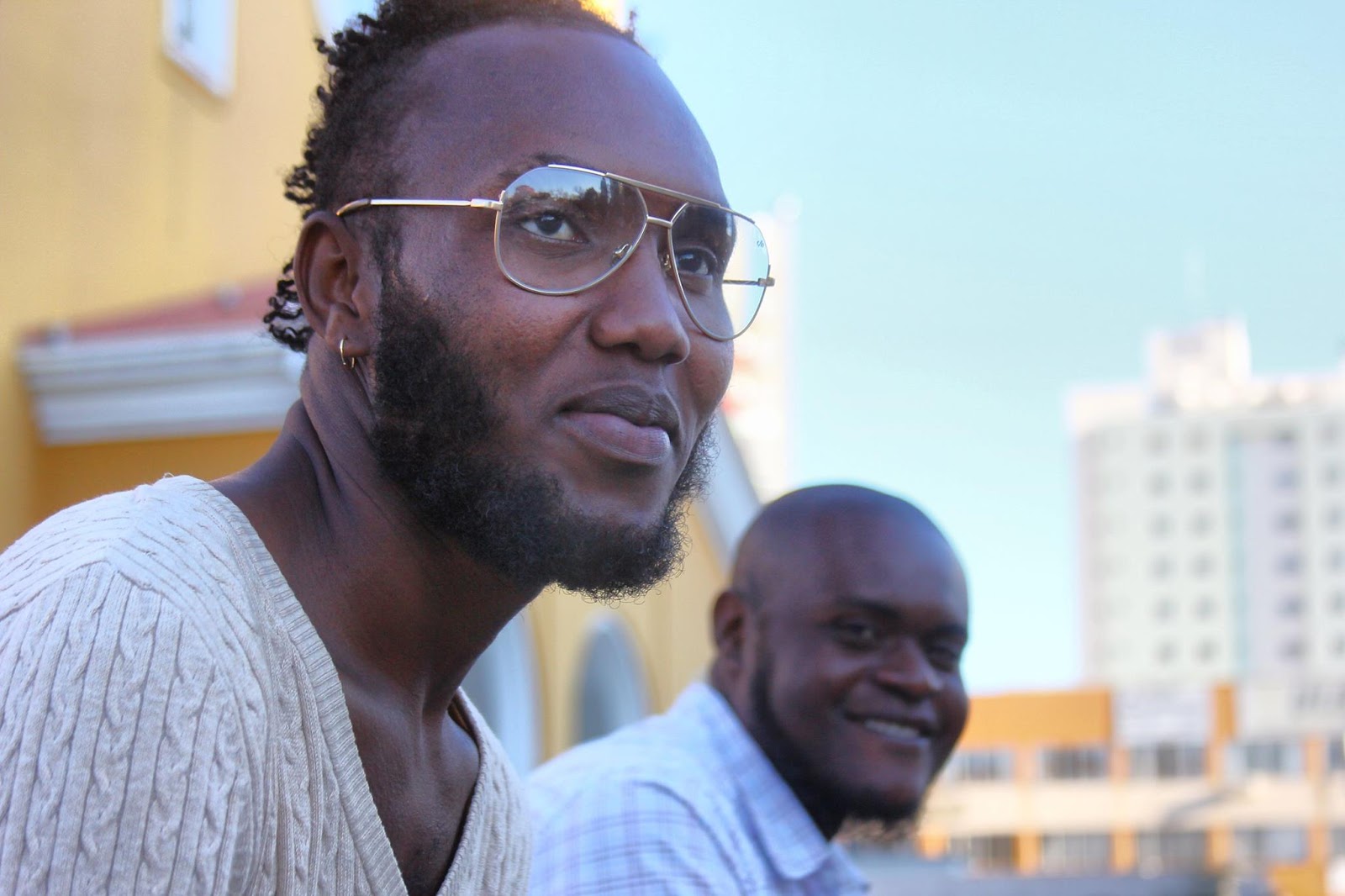
Two Haitian immigrants in Pato
Branco (photograph by Dan Jaeger)
The majority of the population is descended from European immigrants, in large part Italians from Veneto, in the North of Italy.  This has a marked influence on the culture of the city with many Italian-based customs and parties, a fondness for pasta and polenta and many shops and restaurants with Italian names.  There are also a significant number of people descended from Ukraine, Germany and Poland.  There is even a Ukrainian church in the city with Ukrainian parties and food.  This being Brazil, many of the cultures and traditions mix and it is not uncommon to meet people with recent ancestry from Italy, Ukraine, Germany, Portugal in various combinations!  Relatively recently, there has been a wave of immigrants from Haiti, with the largest community of Haitians in Paraná.  After the devastating earthquake in Haiti, several companies helped Haitians to obtain documentation to work, helping them to find housing and bring their families.  The Haitian community is generally happy in Pato Branco (except maybe for the cold in the winter months!) and are integrating well into the community.
 
The Ukrainian church (Paróquia Nossa Senhora do Perpétuo Socorro) in winter
Empty streets
The city is a small rural city with an economy based on agriculture, although in recent years it has seen growth in the areas of IT and electronics.  The city has been growing rapidly as a result of this change, with an increase in population from 72,370 in the last census in 2010 to an estimated 79,869 as of 2016.  This has changed the face of the city, even in the few years since I started coming here, there are considerably more apartment blocks, with several new buildings under construction.  In anticipation of further growth, there is a plan to relocate the city centre to an area just north of the city.  People have been buying up plots of land in anticipation of the move, although no one really knows when this will happen.  With the current recession in Brazil, the worst on record (according to the BBC), development has slowed somewhat with new roads running between empty plots of grassy land, waiting for movement. 


One thing that I have found funny since moving to Pato Branco; no one has asked whether I like living there, only whether I am “adapting”!  I’m not sure whether they are referring specifically to Pato Branco or to Brazil in general, but yes, I’m adapting!  It is a lot different to what I’m used to – it’s certainly not a large metropolitan area like London or the Bay Area and neither is it like a small town in Britain.  It has most of the services you would expect of a city – supermarkets, pharmacies, post office, hospitals etc – but the supermarkets close at 8pm and you’ll be lucky to find anything open on Sunday.  There is a cinema now though!  It opened a few months ago and means that you no longer need to drive 2-3 hours to find a cinema, though it does only have 3 screens (though having said that, it’s no different to where I grew up in a small town in Northeast Scotland.)  So yes, it is different to what I’m used to, but I am getting used to it, and it is a pretty town.

Praça Getúlio Vargas
Like many cities in Brazil, the centre of Pato Branco is well built-up, with several colourful apartment clocks, approximately 15 to 20 stories high.  This, as well as the numerous steep hills, gives the impression that the city is bigger than it is.  All the same, when you crest a hill and see the city spreading out with smaller houses, it’s clear to see how the city is growing.  It does still maintain a small community feel though.  The yellow church forms a scenic centre-point, and the fountains and trees of the Praça Getúlio Vargas directly in front of the church makes the centre of town a pleasant place to walk or sit and relax.  Indeed, at weekends and summer evenings, it is fairly common to see families gathered in the square talking and drinking chimarrão (a hot, yerba mate drink typical of Southern Brazil and Argentina.)


The accent and dialect is one area that I did struggle with, though.  When I started learning Portuguese, I mostly heard accents from São Paulo and Rio de Janeiro, with the São Paulo accent relatively easy for me to understand.  In Pato Branco, though, the accent is markedly different.  In much the same way as rural English accents can differ from more metropolitan accents, the rural Paraná accent is a lot different to the accent from São Paulo and even Curitiba.  Even now, having lived here for about 15 months, I can get caught out by some unusual expressions!

Birds flying around the church (Paróquia São Pedro Apóstolo)
(Photograph by Dan Jaeger)
The increase in population has resulted in increases in traffic, which has forced the city to make a string of changes to the roads to cope with the increased demand.  Some changes, such as replacing stop signs with traffic lights have greatly improved things for road users, while some changes are less welcome, such as changing some one-way streets (which worked due to alternating the direction of traffic on parallel streets) to two-way without reconsidering the traffic signals, which no longer leave time for pedestrians to cross, meaning you have to take your chances and hope that a car doesn’t come flying around a blind corner.

Pato Branco = White Duck
The city become well known in Brazil as a result of a comedy, “Toma Lá, Dá Cá,” which featured a character from Pato Branco with a strong countryside accent constantly telling long-winded folk tales about the people of the city.  The first time I became aware of this, I was in a restaurant in London with my wife (girlfriend at the time) and she noticed that the waiter was Brazilian.  The restaurant wasn’t busy se we chatted with him and he burst out laughing when she said she came from Pato Branco – he thought it was a fictional city!  It wasn’t the first time I found Brazilians laughing about the name of the city.  The city is also known for being the home of footballers Alexandre Pato (who played for the national side, and teams including Corinthians, Milan and Chelsea) and Rogério Ceni, the former goalkeeper of São Paulo.


Pato Branco is a lovely, peaceful city that’s perfect for raising a family.  There is a strong economy and, with the upcoming opening of the airport to commercial flights, I am sure the city will continue to grow and prosper.

The city centre, shortly before a summer storm

Wednesday, 3 August 2016

Spending Winter in Brazil

Take just about everything you think you know about Brazil and put it to one side – save it for summer.  Winter in Brazil – or at least in the south – takes on a completely different style.  Gone are the trips to the beach, nights spent trying to keep cool, walking around in shorts and t-shirt, now we have Festa Junina, nights spent under half a dozen blankets and wearing jumpers and jackets to sit around the house.  You don’t need to spend much time in the South of Brazil to see some cultural differences with the rest of Brazil, but when June arrives, these cultural differences come through even more.

I’ve already written about how bloody cold it gets here, so I won’t dwell on it, although the weather is far from predictable.  At the beginning of June, the overnight temperatures were reaching 0°C, although it has since become somewhat milder with daytime highs around 24°C and night-time lows around 10°C.  All well and good, but I’m waiting for temperatures to plummet again, this winter has been too easy so far!

A pinha, full of pinhões
One of the first signs of the approaching winter is the availability of pinhões in the supermarkets and by the side of the roads.  Even before the start of the season, a pinhão hysteria takes over Paraná and people start counting down, licking their lips in anticipation.  You may recall me writing about these seeds and how I wasn’t altogether very impressed.  Well, as I suspected, they are an acquired taste and after a month or so, I appear to have acquired that taste, to the point where I am now a firm believer in selecting the best pinhões, as opposed to simply scooping a load into a bag!


Once winter arrives, there is another culinary shift.  The customary light evening meal (usually breads, salami, cheese, maybe some salad) is replaced by more warming fare, typically soups. One popular soup is sopa de agnoline.  This is a soup that was brought to Brazil by Italian immigrants and consists of stuffed pasta (agnoline or cappelletti) – a bit like dumplings – in a thin, watery broth with pieces of chicken.  I might not be selling this very well, but it is very tasty and just what you need on a cold winter evening!  Again, this is a dish that the locals take very seriously, I’ve lost count of the number of people who have asked me whether I’ve tried sopa de agnoline!

Quentão with gemada

So you’ve munched on a pinhão or three (probably accompanied by chimarrão), had a filling dinner of sopa de agnoline and now you’re hiding under a blanket in the living room, trying to get warm.  What you need is a good, warming drink.  Forget coffee at this time of night, you’re looking for quentão.  Quentão (literally translated, means big warm) is essentially mulled wine (or glühwein or vin chaud if you prefer.)  The preparation is slightly different to European varieties of the drink, and usually consists of red wine (the cheap and nasty stuff you would never normally drink), sugar, ginger, cinnamon and cloves.  It is sometimes served with gemada – raw egg yolks beaten with sugar – making it thick and sweet.  In São Paulo, quentão is made using cachaça (and no gemada), but I have not yet tried this, and the quentão I previously described is called vinho quente (literally, hot wine.)

A popcorn cake at the
church hall in Pato Branco
All of this comes together in Festa Junina, a popular party held throughout June and continuing into July.  Sometimes known as Festa de São João, this is a celebration that is held all over Brazil and involves people dressing up in countryside fancy dress (men as farm boys, boys often with a painted moustache and women and girls wearing pigtails, freckles and red-checked dresses) with winter food and drink (pinhão, popcorn, cornbread and quentão (with a non-alcoholic version made with grape juice for the children), country music and dancing.  The most common type of dance similar to square dancing, called quadrilha, which is performed to country music and is centred around a mock wedding.  During the daytime, these quadrilha are mostly performed by children, although adults also participate in the evenings.  There are several festas juninhas held throught the cities, often organised by schools and churches, throught June and July.

On 26th June (Sunday) in Pato Branco, a large Italian lunch was organised by the church, in the massive hall across the road from the church – part of two weeks of festivities for Festa de São Pedro, St Peter’s Feastival, the patron saint of Pato Branco.  As well as the triangular flags of festa junina, the hall was decorated in red, white and green and filled with long tables.  The food was typical of Italian food at the time of mass emigration to Brazil (North Americans call it family-style), but with a Brazilian twist.  The tables were called to the hot buffet stations one at a time to load up with pasta, salad, polenta, chicken and pork, although there were warnings not to take too much, you can always go back for more!  The lunch was finished off by a selection of cakes and sweets for purchase.
Italian lunch, showing one of the queues for food
and the rows of tables


Choosing meat for the barbecue
The conclusion of festivities for the Festa de São Pedro was the barbecue.  St Pedro’s day is on 29th June (Wednesday this year) and a local holiday (unless you happen to be a home-based employee of a company in São Paulo, when you get their holidays…) and this is marked by a massive barbecue for the entire city.  The day before, you go to an enclosure full of row after row of barbecues and join the long queue to choose and buy the cut of meat you want, skewered with a card tag to identify it. 

On the day of the barbecue, the fires are lit in the rows of barbecues and the hundreds of skewers are lined up to roast.  The numbers on the car tags identify which barbecue they will go to and aid you in finding it.  Dozens of people attending the barbecues, keeping the fires going and ensuring the meat is well cooked.  At midday, the enclosure is packed with people as half of the city turns out to collect their meat and take it home for lunch. 


After the Festa de São Pedro, the festivities start to die down in Pato Branco, with the occasional Festa Junina and Julina (Festa Junina in July – Julho in Portuguese) popping up here and there, but very infrequently.  The city settles back into its normal rhythms and people wait for the winter holidays.  Of course this typically refers to schools, where the last two weeks of July are holidays (also a welcome break for teachers!)  During this time, people either head north to escape the cold, or venture further south to get colder!  There are two cities in particular that are very popular at this time of year; Gramado and Canela, in Rio Grande do Sul.  These two cities lie in the Serra Gaúcha mountains and are only 9km (6 miles) apart.  In winter, temperatures can drop below 0°C leading to hard frost and snow is not uncommon.  In addition to getting a taste of winter, these cities are popular for the beautiful countryside in which they sit, the Bavarian inspired architecture, chocolatiers and artisan shops.  Gramado is next on my list to visit, more on that later!

Friday, 8 July 2016

The Olympics are Coming

You may not have realised it, but the Olympics in Rio are coming soon.  If you didn’t realise; what cave have you been hiding in, and is there room for one more?

You can’t escape it – everywhere you look, there’s some reference to Rio 2016, the correios (post office) have released a range of Olympic stamps, along with some stickers that can be added to envelopes, Olympic designs are appearing on some R$1 coins, every airport has an official Rio 2016 shop and sports channels fill the ad breaks with reminders of how you can watch all the fun on that particular channel (or network, considering rede Globo seems to own a large portion of the channels).  Then looking at international media, it’s there too: either it’s a new doping scandal and hope it will affect the Rio games, it’s a young hopeful in some given sport who is heading to the games, or – and this is what I see most – it’s stories about how Rio might not be ready for the games and the cleanliness of the water in Guanabara Bay where some of the aquatic sports are to be staged.

Pollution in Guanabara Bay

 So how is the mood here?  Honestly, I haven’t encountered any enthusiasm.  I will qualify this by pointing out that I live in the middle of Paraná, 1,200km (750 miles) from Rio, and maybe the people there are more excited, but here; not so much.  There’s a general feeling that it is not the right time for Brazil to be hosting the Olympics, being in the middle of a recession and assorted political crises.

Juma the Jaguar, appearing in chains with the torch
These negative feelings then turned to anger at the news of the shooting of a jaguar that was used in part of an Olympic torch event in Manaus.  It had reportedly escaped attacked a soldier soon after the event and, after four tranquiliser darts failed to stop the big cat, it was shot dead by a soldier with a pistol.  There was initially anger over the use of a chained, wild animal together with the Olympic torch, which was only amplified over the news of its death. 

Pink River Dolphin
lured out of the water
Soon after this, there was more outrage as a torch bearer entered a river and lured an endangered pink river dolphin out of the water to be photographed by the torch.  While the organisers claimed that the dolphin was in its natural habitat, many people were angered about the exploitation and harassment of wild animals for the purposes of publicity, especially after the death of the jaguar.

Since then, there are been several attempts to extinguish the flame as it tours Brazil, including using a fire extinguisher and a bucket of water.  So when the torch came to Pato Branco, we didn’t know what to expect.  I was told that the torch would be carried through the town, along Rua Tocantins, where I live and would make its way to the Ginásio Patão, a sports complex on the outskirts of the city.  I wasn’t particularly excited about the torch, but non-the-less interested to see it – it’s not every day the Olympic torch passes through your town after all.  So I decided I’d watch from the balcony and take a few photos; maybe the aerial viewpoint would be quite interesting.  I didn’t know exactly what time it would pass, so I settled down to watch the Germany vs Italy match on tv, keeping an eye out the window. 

Calm as the procession approached
By 5pm, the sun was starting to set and there was still no sign of the torch.  By 6pm, there was noise from the city’s square, but no sign of the torch, the sun was down and the last glows in the sky were fading.  It wasn’t until 7pm, with the sky completely dark, that the road was closed and a procession of vehicles started to slowly makes its way down Rua Tocantins.  We have a net on the balcony, to prevent the cats from falling, which meant I had no chance of taking a picture with the flash, so – somewhat grumpily – I went outside to await the torch. 
 
One lane of the road had been closed off, with tape barriers protruding into the road at an angle to allow crowds an unobstructed view of the procession making its way up the hill, although they needn’t have bothered as there was hardly anyone else waiting; near me, there was a woman and her daughter down the hill and a small group slightly higher up, elsewhere I saw scattered groups of people.

The procession was preceded by several police motorbikes driving up and down to clear the road and, I assume, looking for people with buckets, although there did not appear to be any trouble and eventually the procession arrived.  First came a small coach carrying torch-bearers for the next stages of the relay, followed by floats for Coca Cola (handing out small cans of coke) and Bradesco (a Brazilian bank) and finally, the torch bearer, closely surrounded by fire fighters singing army running songs as they passed.

Just then, I bumped into my wife’s cousin, who had been in the square for the start of the relay and followed the torch to where I was now.  We decided to head up the hill to Ginásio Patão to see the end of the Pato Branco torch relay.  When we arrived, the atmosphere was completely different.  Rather than random bunches of interested onlookers, this was a festival.  A large stage had been set up with live music, giant inflatable balloons with the Olympic and Coca Cola logos (I always like the irony of pairing up one organisation that is concerned with the absolute pinnacle of human fitness and sporting achievement, and the other a purveyor of sugary soft drinks – completely different ends of the spectrum!) and floats where you can queue to have your photo taken with an Olympic torch and one of the sponsors’ products in the background (Coca Cola or Bradesco logos, Nissan cars…)

Giant balloons over the crowd
As arrival time for the torch approached, two giant white ducks (the name Pato Branco literally means ‘White Duck’) made their way to the stage, where they remained, bobbing around until the end of the festivities.  A buzz of excitement went through the crowds, everyone gathered by the barriers, phone aloft and the torch bearer arrived to much excitement.  The flame was then transferred to another torch, which was taken through the gates to the newly renovated sports complex, before returning to the middle of the crowd and making its way to the stage to light the larger torch.  Finally, after an interview and some speeches (although I couldn’t tell who was actually on the stage), the flame was transferred to a lantern and the torch on stage was extinguished.  The crowds started to melt away and it wasn’t long before the stage was being disassembled in order to take the show to the next destination.


Olympic Torch on the stage
The day seemed to be a good representation of the country’s ambivalence towards the games, somewhat similar to the thoughts about the World Cup in 2014.  While people are angry that the games are going ahead against a backdrop of recession and corruption, that Guanabara Bay is still polluted, that wild animals were used for publicity and harassed or killed, there is still a seam of excitement running through a country, a sense of participating in history and, when the games begin, I’m sure the country will be getting behind their athletes and enjoying the games.

Tuesday, 7 April 2015

What happened to Atlético?

A few weeks ago, I discovered that Pato Branco, a small city in (I’m sorry, I meant the Capital of) Southwest Paraná actually has a football team.  Not only this, but they are in the second division of the Campeonato Paranaense (which has three divisions.)  I joked that if Atlético Paranaense (first division team from the state captal, Curitiba) didn’t improve, we might be watching them play away games in Pato Branco.


Ha ha ha, as if…

Hold on a minute, “relegated” you say??

Almost…  After a terrible run in the Campeonato Paranaense, (including a home defeat against Maringá, a team that is currently in serie D – the 4th division – of the Campeonato Brasileiro, the national championship, see http://maried-a-brazilian-support-group.blogspot.com/2015/03/atletico-atletico.html ) the unthinkable happened, and they are now in the special group of four teams fighting to avoid being relegated to the second division.  A division so low that  the Globo Esporte website (first stop for Brazilian football results and tables) does not even mention its existence!  As a loyal (albeit new) fan of Atlético, I may now have to bookmark the website for the Federação Paranaense de Futebol to follow the state championship!

This group of four struggling teams is called descenso – descent.  All four begin with 0 points and play each team twice – home and away – with two teams surviving and two being relegated.  Atlético got off to a good start, beating Prudentópolis 2-0, but this is a situation that no top flight team should be in. 


If Atlético don’t get their act together, I may be planning my next trip to Pato Branco to coincide with an away game!

Friday, 20 March 2015

My Visit to Mater Dei School

While visiting Pato Branco (Southwest Paraná) I was invited to visit a local school that has a bilingual project.  For many of the students, it was their first contact with a native English speaker and gave them a great opportunity to practise what they had learned and ask questions about my culture.  It was a fun day and one that I won’t forget any time soon!

When each class arrived, they were shy and nervous; I guess embarrassed about potentially making mistakes in front of their classmates (we’ve all been there…)  I briefly introduced myself and invited them to ask me questions. 
"Teacher" for the day!

There were several questions I expected; do you like Brazil?  What do you like about Brazil? What’s your favourite food?  And so on.  Then there were some questions that really made me think about why they were being asked.  “Have you ever been robbed in Brazil?”  The answer, thankfully, is no, and that goes for other countries.  I’ve become accustomed to people in the US saying “oh, but isn’t Brazil dangerous?”, “isn’t there a lot of crime?” (Walk through some ‘interesting’ parts of Oakland, CA, then ask me that) but it was surprising to be asked the question in Pato Branco, which is a small city in the countryside.  It appears to point to a general pessimism that’s can be seen around Brazil – a misguided belief that Brazil cannot compare to other countries such as the USA and countries in Europe.  It would be wrong to say that crime does not exist in Brazil, but as a country as a whole, I don’t think it should be known as a dangerous country and I really hope to see this negative opinion change in my lifetime.

A similar question was “what were you scared of when you first came to Brazil?”  Again, I thought of the motive behind the question; did it reflect the fear of the unknown, the doubts some people always feel when I first go to a new place?  Or was it another slightly downbeat opinion of the country?  I can’t be sure, but I know they didn’t expect my answer.  My first trip to Brazil was in December 2007; I left a cold, wet, rainy England, stopped in Amsterdam (umm, cold?  Maybe, I was in the airport an hour or so, so I can’t say) then had a 9 hour flight to São Paulo.  I knew that December was summer time in Brazil and I was expecting nothing but blue skies and sunshine.  As the plan descended towards São Paulo, all I could see was thick cloud cover.  What was I scared of when I first came to Brazil?  That I’d just taken a 9 hour flight and arrived back in England!

Some of the subjects; my favourite
film, which team I support in England...
Football was a popular theme, which came as no surprise, and invited controversy.  I wore a white Atlético Paranaense shirt, which was already enough to attract comments from the Fanaticos (nickname for the fans of Atlético) and the Coxa fans (some other team from Curitiba…) Of course, not everyone noticed – it doesn’t stand out as much as the red and white striped home shirt would – so the inevitable question of what team I support in Brazil.  My answer tended to drive the class wild!  A large proportion threw their arms up and cheered; a minority put their head in their hands.  If there is anywhere in the world that the term “it’s just a game” does not apply, it’s Brazil!
In the afternoon, came the turn of the younger students.  As they were only about 8 or 9, their English was very basic, so I gave my answers in English and Portuguese (thus making it educational for me too!)  After the nervous, slow pace of questions from the teenagers in the morning, the excited energy of the younger kids came as a surprise! 


What struck me most was the reaction to my answers.  “What’s your favourite colour?” one asked me.  I pointed to the blue sky of the Big Ben mural on the wall and responded “Blue, azul.”  The response was a cheer from the questioner!  I got even bigger cheers when I answered “sweets” when asked if I preferred sweets, fruit or savoury food.  I admit it, I have a sweet tooth! 
But one question bowled me over.  Do I prefer apples or tomatoes?  What possessed them to ask such an obscure question?  Ok…  I’ve never liked tomatoes (except when cooked in a dish, in a sauce etc) so I answered “apples.” 

Well…

You’d have thought Brazil had won the world cup, Disney had announced a new resort in Pato Branco and each of them had won the lottery!  I guess it was the right answer!  I asked the teachers if they knew how anything about it and the answer is a journey into child psychology!  Being children, they of course do not like to eat salad and healthy stuff like that; they’d rather eat the good stuff, like meat, pão de queijo and so on.  So parents hit back by tell them that it’s a fruit; you like apples, bananas and pineapples, why not tomatoes?  Well of course, the kids are too smart to fall for the old tomatoe-is-a-fruit-so-you-must-like-it trick and decided to get the opinion of the visiting Englishman.  Sorry parents, I hope I haven’t set back your efforts too much!  (But I really don’t like tomatoes!!)

When discussing the day with the teachers, they expressed surprise at the questions that were asked.  In the normal lessons, the students overflow with questions about culture and life in the UK and USA and were surprised at how restrained they were.  Our conclusion was that in the hot seat, with the foreigner in front of them and classmates all around, the nerves got to them.  Or maybe they just forgot.


Which brings me to this question: “what are teenagers like in the UK?”  Answer: “pretty much the same as here.”  Faced with a real live German in my German classes at school, I’m sure we’d have come up with the same questions, with the same nerves and the same shy refusals to ask questions to begin with.

Vice director Fabricio, teacher Elisa and myself

Wednesday, 18 March 2015

Taking Cats to Brazil - Part 4: The Conclusion!

Curitiba to Pato Branco

I’ll start off with some geography for those not familiar with the south of Brazil.  Our destination of Pato Branco is a small town of less than 70,000 people in the southwest of Paraná.  It is 438km (272 miles) from Curitiba, the capital of Paraná.  This takes approximately 5 hours by car or 7 hours by coach.
Pato Branco, showing the driving route from Rio de Janeiro via Curitiba


The first step in planning this leg of the journey was checking whether the coaches would accept the cats.  Only one company would accept the cats – Cattani.  They operate two services from Curitiba to Pato Branco: “Executivo” – business class or “Leito” – first class sleeper coach, with very comfortable, fully reclining chairs.  We could take the cats in their carriers and they would go in a small cabin where a second driver (for longer journeys) could sleep.  The other company said they would go in the luggage compartment and only if we signed a document absolving them of all responsibility for the welfare of the cats.

So obviously, we decided to go with Cattani.  The executivo departs at 10pm and the leito departs at 10:30pm.  As our flight was due to arrive at 8:30pm (outside the city – the bus station is in the city centre) we resolved to find a hotel; preferably one where we could leave the cats until it was time to get the coach (the earlier coaches are all operated by the shove-them-with-the-luggage-and-don’t-blame-us company.)

Sheila called around various hotels to find one that would accept cats.  The story of one of these calls will stay with me forever:
  •          Hello, do you accept cat’s in your hotel?
  •          Madam, this is a hotel for people…
  •          I’m sorry, you don’t understand, I want to stay here with my cats!
  •          Madam, you need to take them to a cat hotel.
  •          But I can’t stay with them in a cat hotel!
  •          Aaaaaaahhhhhhh…. I’m sorry, we don’t accept cats.

She found one eventually though, Novo Vernon Hotel, directly opposite the bus station.  For an additional R$50 we could have cats, which is perfectly reasonable when you think of the extra mess from hair, food, litter that needs to be cleaned up.  What’s more, we could have the room until 6pm for half the daily rate, which was also very reasonable (after that time, there would be no one to clean the room which would mean they could not let it out.)  In addition, we could leave our luggage as long as we needed – they were extremely helpful.

It did not take us long to see that it would have been impossible to catch the coach the night we arrived.  After collecting our luggage, passing through immigration and customs and having had the cats’ paperwork inspected, we were met my two of our friends from the area (any friend that meets you at the airport with a bag of pão de queijo is a true friend!) and we proceed to fill the car with luggage and cats in a way that should not have been possible!  By the time we were finished, it was already approaching 10pm.  There was no space for passengers, so three of us took a bus to the bus station and we all met at the hotel.

Kiwi's first experience of
Curitiba
We unloaded at the hotel and left the cats for a while to relax in peace (it was only a fringe benefit that we had a few beers and something to eat, honest!)  When we returned, the cats were hiding under the beds, but they purred happily when they realised it was us and there were no more boxes!  We felt sorry for them knowing we’d be putting them through it again the next day, but for the time being, they were free and happy and we were exhausted!


When we got to the bus station, we were told that the cats would be travelling with the luggage.  We weren't happy about this, but by this point we had little choice.  They were in the hard carriers we bought for the flight and the luggage was arranged such that it wouldn't become loose and hit the carriers.  When we finally reached Pato Branco, shortly after 5am, we had two tired, scared but healthy cats, ready for their new life in Brazil with my mother-in-law and her cat, Dunga.  But that’s another story.


If this whole saga has taught me anything, it’s too avoid travelling long distances with pets.  Aside from the cost and hassle of arranging flights, hotels and buses that will take cats, it is incredibly stressful for the cats.  Unless you absolutely cannot leave the cats with someone, don’t take them!  And if you must, avoid American Airlines!

Pretzel taking in the sights and sounds of Pato Branco

Kiwi surveying his new domain