|
Pato Branco from the air, the yellow church is in the
middle of the shot |
I must correct a terrible omission… I have a blog about Brazil but have not
written about the one place in which I have spent more time than anywhere else
in Brazil – Pato Branco! I have been
coming here since December 2008 and have lived here since December 2015, how
could I have missed this place?!
You can be forgiven if you have never heard of Pato Branco,
it is a relatively small city deep in the countryside of southern Brazil. With a population of just under 80,000
people, it is considered to be the capital of Southwest Paraná, one of the 3
southernmost states in Brazil. I should point
out that residents of neighbouring Francisco Beltrão (the “little city” is
actually a bit bigger than Pato Branco, with a population just under 85,000) do
not necessarily share this opinion, so I’ll move swiftly on.
 |
| Where is Pato Branco? From Google Maps |
Pato Branco (meaning White Duck in English) is a very young
city, marking its 65th birthday in December 2016. It started life as a colony called Colônia
Bom Retiro, founded in 1918 to resettle people unsatisfied with the result of a
border dispute with the neighbouring state of Santa Catarina. The name Pato Branco comes from a telegraph
station Posto do Rio Pato Branco (station of white duck river) and people began
to refer to the region as simply Pato Branco, becoming official in 1938.
 |
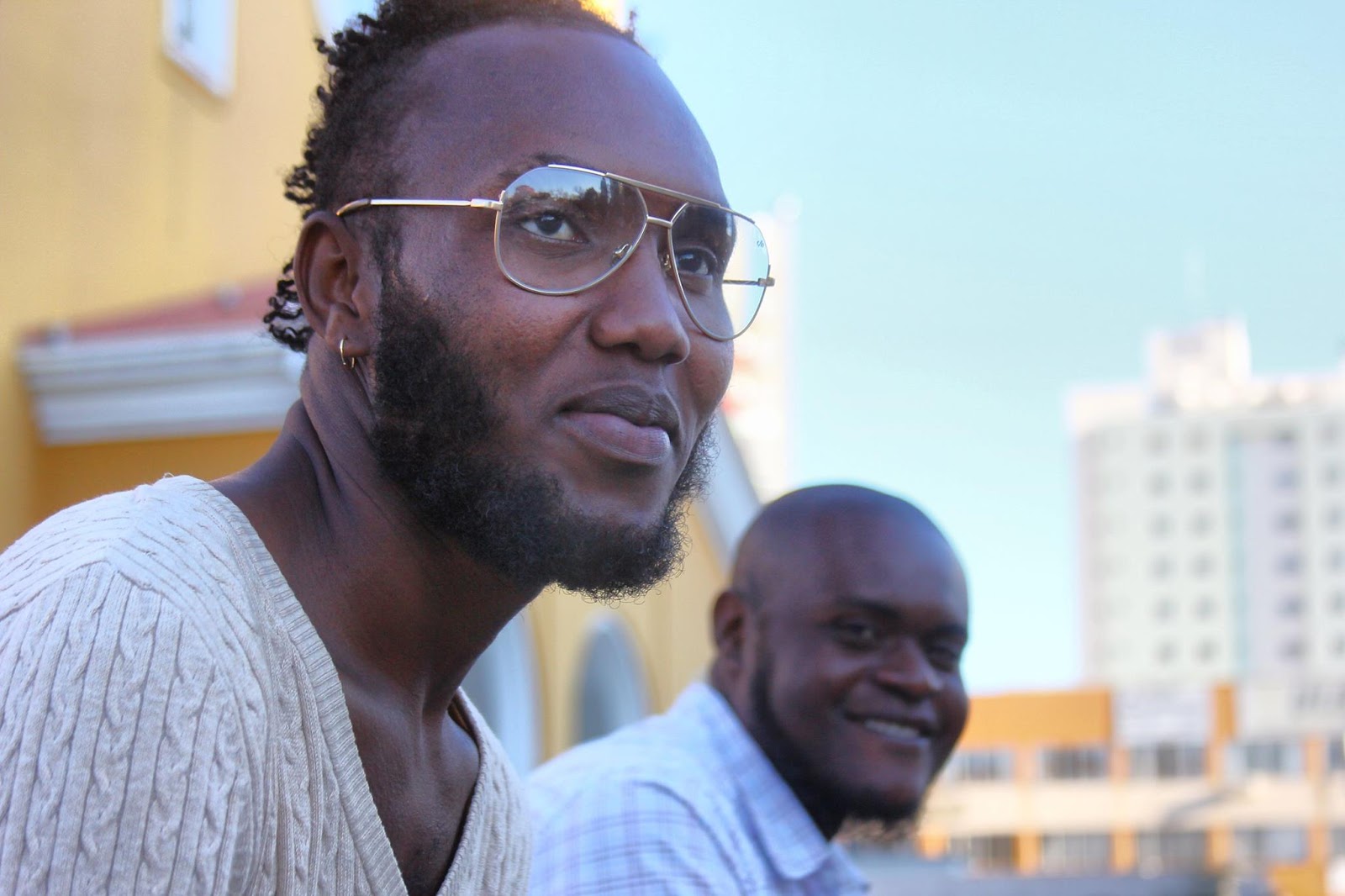
Two Haitian immigrants in Pato
Branco (photograph by Dan Jaeger) |
The majority of the population is descended from European
immigrants, in large part Italians from Veneto, in the North of Italy. This has a marked influence on the culture of
the city with many Italian-based customs and parties, a fondness for pasta and
polenta and many shops and restaurants with Italian names. There are also a significant number of people
descended from Ukraine, Germany and Poland.
There is even a Ukrainian church in the city with Ukrainian parties and
food. This being Brazil, many of the
cultures and traditions mix and it is not uncommon to meet people with recent ancestry
from Italy, Ukraine, Germany, Portugal in various combinations! Relatively recently, there has been a wave of
immigrants from Haiti, with the largest community of Haitians in Paraná. After the devastating earthquake in Haiti, several
companies helped Haitians to obtain documentation to work, helping them to find
housing and bring their families. The
Haitian community is generally happy in Pato Branco (except maybe for the cold
in the winter months!) and are integrating well into the community.
 |
| The Ukrainian church (Paróquia Nossa Senhora do Perpétuo Socorro) in winter |
 |
| Empty streets |
The city is a small rural city with an economy based on
agriculture, although in recent years it has seen growth in the areas of IT and
electronics. The city has been growing
rapidly as a result of this change, with an increase in population from 72,370
in the last census in 2010 to an estimated 79,869 as of 2016. This has changed the face of the city, even
in the few years since I started coming here, there are considerably more apartment
blocks, with several new buildings under construction. In anticipation of further growth, there is a
plan to relocate the city centre to an area just north of the city. People have been buying up plots of land in
anticipation of the move, although no one really knows when this will
happen. With the current recession in
Brazil, the worst on record (
according to the BBC), development has slowed somewhat with new roads running between empty plots
of grassy land, waiting for movement.
One thing that I have found funny since moving to Pato
Branco; no one has asked whether I like living there, only whether I am “adapting”! I’m not sure whether they are referring specifically
to Pato Branco or to Brazil in general, but yes, I’m adapting! It is a lot different to what I’m used to –
it’s certainly not a large metropolitan area like London or the Bay Area and neither
is it like a small town in Britain. It
has most of the services you would expect of a city – supermarkets, pharmacies,
post office, hospitals etc – but the supermarkets close at 8pm and you’ll be
lucky to find anything open on Sunday.
There is a cinema now though! It
opened a few months ago and means that you no longer need to drive 2-3 hours to
find a cinema, though it does only have 3 screens (though having said that, it’s
no different to where I grew up in a small town in Northeast Scotland.) So yes, it is different to what I’m used to,
but I am getting used to it, and it is a pretty town.
 |
| Praça Getúlio Vargas |
Like many cities in Brazil, the centre of Pato Branco is
well built-up, with several colourful apartment clocks, approximately 15 to 20
stories high. This, as well as the numerous
steep hills, gives the impression that the city is bigger than it is. All the same, when you crest a hill and see
the city spreading out with smaller houses, it’s clear to see how the city is
growing. It does still maintain a small
community feel though. The yellow church
forms a scenic centre-point, and the fountains and trees of the Praça Getúlio
Vargas directly in front of the church makes the centre of town a pleasant
place to walk or sit and relax. Indeed,
at weekends and summer evenings, it is fairly common to see families gathered
in the square talking and drinking chimarrão (a hot, yerba mate drink typical
of Southern Brazil and Argentina.)
The accent and dialect is one area that I did struggle with,
though. When I started learning
Portuguese, I mostly heard accents from São Paulo and Rio de Janeiro, with the
São Paulo accent relatively easy for me to understand. In Pato Branco, though, the accent is
markedly different. In much the same way
as rural English accents can differ from more metropolitan accents, the rural
Paraná accent is a lot different to the accent from São Paulo and even
Curitiba. Even now, having lived here
for about 15 months, I can get caught out by some unusual expressions!
 |
Birds flying around the church (Paróquia São Pedro Apóstolo)
(Photograph by Dan Jaeger) |
The increase in population has resulted in increases in
traffic, which has forced the city to make a string of changes to the roads to
cope with the increased demand. Some
changes, such as replacing stop signs with traffic lights have greatly improved
things for road users, while some changes are less welcome, such as changing some
one-way streets (which worked due to alternating the direction of traffic on
parallel streets) to two-way without reconsidering the traffic signals, which
no longer leave time for pedestrians to cross, meaning you have to take your
chances and hope that a car doesn’t come flying around a blind corner.
 |
| Pato Branco = White Duck |
The city become well known in Brazil as a result of a
comedy, “Toma Lá, Dá Cá,” which featured a character from Pato Branco with a
strong countryside accent constantly telling long-winded folk tales about the
people of the city. The first time I
became aware of this, I was in a restaurant in London with my wife (girlfriend
at the time) and she noticed that the waiter was Brazilian. The restaurant wasn’t busy se we chatted with
him and he burst out laughing when she said she came from Pato Branco – he thought
it was a fictional city! It wasn’t the
first time I found Brazilians laughing about the name of the city. The city is also known for being the home of
footballers Alexandre Pato (who played for the national side, and teams
including Corinthians, Milan and Chelsea) and Rogério Ceni, the former
goalkeeper of São Paulo.
Pato Branco is a lovely, peaceful city that’s perfect for
raising a family. There is a strong
economy and, with the upcoming opening of the airport to commercial flights, I
am sure the city will continue to grow and prosper.
 |
| The city centre, shortly before a summer storm |

 Recently, we found out that someone has done
just this. Seu Lima has a sanctuary just
outside Pato Branco where he takes in stray dogs, cats and even monkeys. Amazingly, he does this without any
assistance from the city, even though he is performing a valuable service by
giving a home to stray dogs and cats in the city. When we visited him, we were greeted by a
cacophony of dogs barking and seu Lima came out to meet us. We were immediately taken by his friendly
nature and the love for his animals which was clear from the way he spoke.

 Seu Lima then took us on a tour of the
sanctuary. He petted each of the dogs as
we passed, with a story about most of them.
They were generally kept one or two dogs to a pen and we were impressed
with how clean each pen was, despite the huge number of animals. Most of the dogs (at least those that have
spent some time there) appear well fed and in good spirits, although many show
signs of the abuse or neglect the suffered prior to their rescue – one fled to
the roof of her kennel as I passed and, clearly shaking, urinated in fear. We also saw animals that with amputated
limbs, missing eyes and other injuries and health problems. Seu Lima told us about the first dog he
rescued, who was abandoned at the side of the road and someone had thrown
either hot water or hot oil at him. In
some ways, it was horrible to see the state of some of the animals, but at the
same time, I was glad that they were being fed, sheltered and very well cared
for.