You may not have realised it, but the Olympics in Rio are
coming soon. If you didn’t realise; what
cave have you been hiding in, and is there room for one more?
You can’t escape it – everywhere you look, there’s some
reference to Rio 2016, the correios (post office) have released a range of
Olympic stamps, along with some stickers that can be added to envelopes,
Olympic designs are appearing on some R$1 coins, every airport has an official
Rio 2016 shop and sports channels fill the ad breaks with reminders of how you
can watch all the fun on that particular channel (or network, considering rede
Globo seems to own a large portion of the channels). Then looking at international media, it’s
there too: either it’s a new doping scandal and hope it will affect the Rio
games, it’s a young hopeful in some given sport who is heading to the games, or
– and this is what I see most – it’s stories about how Rio might not be ready
for the games and the cleanliness of the water in Guanabara Bay where some of
the aquatic sports are to be staged.
Pollution in Guanabara Bay
So how is the mood here?
Honestly, I haven’t encountered any enthusiasm. I will qualify this by pointing out that I
live in the middle of Paraná, 1,200km (750 miles) from Rio, and maybe the
people there are more excited, but here; not so much. There’s a general feeling that it is not the
right time for Brazil to be hosting the Olympics, being in the middle of a
recession and assorted political crises.
Juma the Jaguar, appearing in chains with the torch
These negative feelings then turned to anger at the news of
the shooting of a jaguar that was used in part of an Olympic torch event in
Manaus. It had reportedly escaped
attacked a soldier soon after the event and, after four tranquiliser darts
failed to stop the big cat, it was shot dead by a soldier with a pistol. There was initially anger over the use of a
chained, wild animal together with the Olympic torch, which was only amplified
over the news of its death.
Pink River Dolphin lured out of the water
Soon after this, there was more outrage as a torch bearer
entered a river and lured an endangered pink river dolphin out of the water to be
photographed by the torch. While the organisers
claimed that the dolphin was in its natural habitat, many people were angered
about the exploitation and harassment of wild animals for the purposes of
publicity, especially after the death of the jaguar.
Since then, there are been several attempts to extinguish
the flame as it tours Brazil, including using a fire extinguisher and a bucket
of water. So when the torch came to Pato
Branco, we didn’t know what to expect. I
was told that the torch would be carried through the town, along Rua Tocantins,
where I live and would make its way to the Ginásio Patão, a sports complex on
the outskirts of the city. I wasn’t
particularly excited about the torch, but non-the-less interested to see it –
it’s not every day the Olympic torch passes through your town after all. So I decided I’d watch from the balcony and
take a few photos; maybe the aerial viewpoint would be quite interesting. I didn’t know exactly what time it would
pass, so I settled down to watch the Germany vs Italy match on tv, keeping an
eye out the window.
Calm as the procession approached
By 5pm, the sun was starting to set and there was still no
sign of the torch. By 6pm, there was
noise from the city’s square, but no sign of the torch, the sun was down and
the last glows in the sky were fading.
It wasn’t until 7pm, with the sky completely dark, that the road was
closed and a procession of vehicles started to slowly makes its way down Rua
Tocantins. We have a net on the balcony,
to prevent the cats from falling, which meant I had no chance of taking a
picture with the flash, so – somewhat grumpily – I went outside to await the
torch.
One lane of the road had been closed off, with tape barriers
protruding into the road at an angle to allow crowds an unobstructed view of
the procession making its way up the hill, although they needn’t have bothered
as there was hardly anyone else waiting; near me, there was a woman and her
daughter down the hill and a small group slightly higher up, elsewhere I saw
scattered groups of people.
The procession was preceded by several police motorbikes
driving up and down to clear the road and, I assume, looking for people with
buckets, although there did not appear to be any trouble and eventually the
procession arrived. First came a small
coach carrying torch-bearers for the next stages of the relay, followed by floats
for Coca Cola (handing out small cans of coke) and Bradesco (a Brazilian bank)
and finally, the torch bearer, closely surrounded by fire fighters singing army
running songs as they passed.
Just then, I bumped into my wife’s cousin, who had been in
the square for the start of the relay and followed the torch to where I was
now. We decided to head up the hill to
Ginásio Patão to see the end of the Pato Branco torch relay. When we arrived, the atmosphere was
completely different. Rather than random
bunches of interested onlookers, this was a festival. A large stage had been set up with live
music, giant inflatable balloons with the Olympic and Coca Cola logos (I always
like the irony of pairing up one organisation that is concerned with the
absolute pinnacle of human fitness and sporting achievement, and the other a
purveyor of sugary soft drinks – completely different ends of the spectrum!)
and floats where you can queue to have your photo taken with an Olympic torch
and one of the sponsors’ products in the background (Coca Cola or Bradesco
logos, Nissan cars…)
Giant balloons over the crowd
As arrival time for the torch approached, two giant white
ducks (the name Pato Branco literally means ‘White Duck’) made their way to the
stage, where they remained, bobbing around until the end of the
festivities. A buzz of excitement went
through the crowds, everyone gathered by the barriers, phone aloft and the
torch bearer arrived to much excitement.
The flame was then transferred to another torch, which was taken through
the gates to the newly renovated sports complex, before returning to the middle
of the crowd and making its way to the stage to light the larger torch. Finally, after an interview and some speeches
(although I couldn’t tell who was actually on the stage), the flame was
transferred to a lantern and the torch on stage was extinguished. The crowds started to melt away and it wasn’t
long before the stage was being disassembled in order to take the show to the
next destination.
Olympic Torch on the stage
The day seemed to be a good representation of the country’s
ambivalence towards the games, somewhat similar to the thoughts about the World
Cup in 2014. While people are angry that
the games are going ahead against a backdrop of recession and corruption, that
Guanabara Bay is still polluted, that wild animals were used for publicity and harassed
or killed, there is still a seam of excitement running through a country, a
sense of participating in history and, when the games begin, I’m sure the
country will be getting behind their athletes and enjoying the games.
Ask most people around the world what they think of the
Brazilian climate and they will tell you that it’s warm, hot, tropical or any
other similar adjective. Mention winter
and they’ll say it can’t be that bad.
Well…
Brazil is a large country from Northern parts above the
equator and the South extending below the tropic of Capricorn. So yes, Brazil is definitely a tropical
country and there are parts of the country where a slight dip in temperature is
barely noticed, parts where there is no real change and parts where the seasons
are defined as rainy and dry.
One of the many winter memes from Paraná
This is my first experience of a Brazilian winter, or a
Paraná winter to be specific, and so far, it doesn’t feel very tropical! While I had been told about how cold it can
get and seen countless memes showing blue, frozen people wrapped in blankets
with icicles hanging from their face, nothing quite prepares you for the
experience.
After the heat of summer, I was expecting a gradual
cool-down to a couple of months of winter, followed by a warm-up back towards
summer. What actually happened was the
start of a gradual cool-down, then a heat wave in April and then a sudden
plummet into winter at the end of the month.
If came as a bit of a shock, one night, struggling to sleep in
oppressive heat and humidity, next night, extra blankets and huddling close for
warmth. The weather stayed mild for some
time – a bit chilly at night, warmish during the day – not too bad…
The mercury dips and these photos appear. Not so bad? It is when it's colder inside the house!
Then came June.
During the night, the mercury dips perilously close to 0°C, raising
above 10°C during the day. This doesn’t
sound too bad, and I used to laugh at the complaints I heard, but then you come
back to the fact that Brazil is a tropical country. For most of the year, the weather is either
warm, hot or very hot, and the houses have been built to accommodate this and
allow the heat to escape. This means
that when the temperature drops outside, indoor temperatures are following
close behind. Central heating on a timer
set to start half an hour before breakfast time is a distant (blissful) memory,
getting undressed for a shower is torturous and the thought of leaving the hot
water and returning to the chilly air fills you with dread. While we have heaters, they are mostly fan
heaters sending directional blasts of warm air, with the unfortunate side
effect that areas not covered appear to suffer a breeze of even colder air,
sending people into hiding beneath layers of blankets, wearing thick jumpers,
jackets and hats.
This all makes me yearn for Britain and the promise of a
nice warm house – until I think about summer and how the efficiently insulated
houses turn on their inhabitants, transforming into hot, sticky saunas and then
I think of how much more tolerable hot summer days can be here, relaxing at the
beach, going to the river, barbecues, caipirinhas and beer…
But June isn’t over, July is coming and I can’t find my
gloves…
One of the most distinctive sights in Paraná is the
araucária, also known as pinheiro-do-Paraná (Paraná pine) or
pinheiro-brasileiro (Brazilian pine).
While it can be found throughout the south of Brazil, it is considered
the state tree of Paraná and can be seen everywhere. While there are several varieties of
araucaria, they all have the same basic shape; tall, with long branches at the
top with leaves forming in round bunches and a flat top – almost as though it
reached a maximum height and then started growing outwards.
A stand of pinheiros near Pato Branco
They can be found almost anywhere around here, either
growing together in stands of pinheiros, sometimes rising above the canopy of a
forest, sometimes growing individually and sometimes in the middle of a
city. It is not uncommon to see a
pinheiro or group of the trees in the middle of a big city, such as Curitiba.
The seeds of the araucaria, called pinhão (the plural is pinhões) in
Portuguese and edible and extremely popular in the South of Brazil and among
populations of native Brazilians. Due to
extensive logging and the popularity of the pinhão, the araucaria has become
endangered and the sale of pinhões is only permitted during a specific period
between April and August. Selling
pinhões outside of this period is considered an environmental crime.
Pinha: where pinhões come from
People in Paraná go insane for these seeds! During the build-up to the start of the
season (which was 1st April this year) local newspapers publish the
date that the season starts and all over social media people post memes and
countdowns until the start of the season. When the magic day arrives, pinhão
sellers appear by the side of every highway, huge crates of the things appear
in the supermarkets and people rush to buy a bag of pinhões then rush to get
them home and in a pan.
So what’s all the fuss about? With such excitement and expectation before
the season begins, with practically everyone asking whether I’d tried pinhão,
it sounds like it’s Brazil’s answer to truffles. The reality?
Um, it’s ok… I have to admit I
wasn’t overly impressed the first time I tried pinhão.
Before you even get to taste it, you need to get past the
shell, the best approach being to carefully bite one end, squeezing the inner
part out through a split in the front.
But it doesn’t always go according to plan: sometimes the split isn’t
big enough and you have to peel away the shell (not the easiest thing in the world),
sometimes you bite into the seed and need to pick bits apart, sometimes you get
a rotten one and when you bite, you get a mouthful of foul-tasting juice. Oh and don’t burn your fingers on the hot
shell, but don’t wait for it to cool, as it’ll be even harder to extract the
inner seed. So before I’d even got into
the pinhão I was irritated with it!
Well, hopefully it’s worth the effort…
Inside the pinhão
As I said, it’s ok, but not amazing. The seed is a few cm long with a firm texture
and an earthy flavour, not quite like anything I’d tried before, improved by
dabbing it in a bit of salt. All I can
assume is that it’s an acquired taste (as you do find yourself working your way
through the bowl at the same pace as anyone else, only slowed down by your
inefficiency at opening the damned things!)
Maybe in a year or so, I’ll be joining in the hysteria when pinhão
season starts again!
There are other ways of eating pinhão, aside from boiling
and squeezing them into your mouth (you can roast them as well but it’s even
more difficult to open them). There are
numerous recipes for meat dishes with pinhão, pizza toppings, pinhão cake,
pinhão pudding… To date, apart from the
aforementioned boiling technique, I’ve only had one dish of meat with pinhão
and it did make for an interesting addition, so let’s see some of these other
recipes.
This may sound a little flippant, but it’s not too far from
the truth. According to law, ministers
may only be prosecuted by the STF (Supremo Tribunal Federal – Supreme Federal
Court) thereby offering a measure of legal immunity. In what sounds like the plot from a very
poorly written soap opera, this is being exploited to prevent ex-president Luíz
Inácio Lula da Silva (commonly known as Lula) from being prosecuted in the LavaJato investigation into corruption.
A small version of the inflatable caricatures of Lula
On 4th March 2016, Lula was detained for questioning
by Federal Police over suspicions of money laundering. Due to the depth of corruption in upper
levels of Petrobras and PT (the Worker’s Party, founded by Lula) many people in
Brazil have long suspected that Lula must have been involved in corruption or
at the very least have been aware and done nothing, so his questioning came as
no surprise to many people, and many anti-corruption protests are characterised
by large inflatable caricatures of Lula wearing convict clothes.
On Friday 11th March, it was announced that
prosecutors were seeking the arrest of Lula in relation to charges of fraud and
money laundering. At around the same
time, it because apparent that PT was planning to make Lula a minister to protect
him from prosecution by Judge Sérgio Moro, the leading investigator of Operação
Lava Jato.
On Tuesday 15th March, following massive protests on Sunday 13th, Lula flew to Brasilia for
talks with president Dilma which were completed on Wednesday 16th
March. It was announced that chief of
staff, Jaques Wagner, would stand down with “greatness and selflessness on the
day of his birthday” to cede his post to Lula.
Some media outlets suggest that the purpose of this is to help protect
president Dilma from impeachment proceedings and Dilma herself claims that the
appointment is to start the economic recovery, but the timing of the decision
and announcement is completely transparent: to protect Lula from prosecution as
part of Lava Jato.
Sérgio Moro, Federal Judge in charge
of Operação Lava Jato
Within hours of the move, Judge Sérgio Moro released phone
recordings that suggest, as was already widely suspected, that Lula’s appointment
is to prevent his arrest. In the
recording, Dilma offered to send Lula a copy of his appointment “in case of
necessity” – where the only conceivable occasion where this document would be
necessary would be an attempted arrest.
Dilma has now said that she will refer the judge to the Supreme Court
for political interference, a move that, to me at least, sounds a lot like “I’m
telling my mummy on you.” There was
anger in Congress with opposition leaders accusing Dilma of breaching the constitution,
chanting “resign, resign.”
...and for Lula
Protestors against Lula...
Of course, the anger was not contained to Congress as all
this led to wide-spread protest across the country on Wednesday evening. In every major city, people were in the
streets wearing green and yellow, waving flags.
In São Paulo, protestors in Avenida Paulista, the principal avenue of
the city, blocked traffic in both directions.
The police estimated that there were 5,000 protestors by 8:45pm and by
the end of the night, this number has risen to 70,000. In Brasilia, around 2,000 people protested at
the presidential palace singing the national anthem. In São Bernardo do Campo 200 protestors
gathered outside Lula’s house, while a separate group of PT supporters also “protested.” Given that Lula was being protected, it’s
hard to see exactly what they were protesting – simply showing support for Lula
by contributing to the noise that would keep him from sleeping! To me, this form of demonstration to support
the government seems reminiscent of demonstrations of support help under
dictatorships, such as in Iraq and Libya.
Protestors in Brasilia. The banner reads "we are with Sérgio Moro"
The protests even spread to smaller towns, such as Pato
Branco. At around 9:30pm, around the
time of the official announcement, people around the city centre started
banging sauce pans and flashing their house lights in protest. On the streets, drivers were continually
sounding their horns. The banging
continued for an hour, while the car horns were still going until 11pm. After this, there was still the occasional
angry beep.
Social media was awash with anger at the appointment and
sadness for the state of Brazil. Many
people posted modified pictures of the Brazilian flag, sometimes showing tears,
sometimes with the colours exchanged for black with the word “luto”, Portuguese
for “mourning.” A message quickly spread
suggesting that everyone angry with Lula’s appointment should wear a black
shirt on Thursday 17th March.
Some of the posts on social media, the general themes are mourning and
fighting corruption
As an outsider, looking in on this system, I find it
entirely unbelievable that anyone under a criminal investigation could be
raised to a ministerial position within government. Regardless of whether he is guilty or
innocent, surely he should be suspended pending investigation and appear in
court to determine the facts of the matter.
If he is proven innocent, then he would be free to continue with his
life, take up any position in government and return to normal – the innocent
have nothing to hide. By making him a
minister and thus immune from prosecution, PT is implying (strongly) his guilt
and show no shame in protecting him.
Which, to my mind, raises important questions about the
motives of the party and their involvement in the Lava Jato scandal.
If Lula is innocent of the charges brought against him, then
it is baffling that he would choose a course of action that, far from clearing
his name, implies guilt. If he is
guilty, then he’s (figuratively) just got away with murder.
This is one of the hardest posts for me to write, partly due
to the complexity and enormous scale of the problem here but also because this
is Brazil’s single biggest problem and has the potential to bring the country
to its knees – indeed, it is already coming close to that. I imagined writing a post about this someday
– preferably once I had really got to grips with the political system here and
my Portuguese was good enough to understand all the subtle nuances – but
current events are guiding my hand.
Corruption - dragging the country down
Corruption is not a new problem here, it dates back to
colonial times, and doubtless came to Brazil along with the European settlers
and immigrants. It has become so endemic
that some people have come to accept it as inevitable and permanent. Sometimes, when you hear about a politician
taking bribes, or money being diverted from where it is needed most, people say
“uh, that’s just Brazil”, “all politicians are corrupt”, “what can we do about
it?”, “it’ll never change” and life
continues as normal. I think that this
is a large contributor to the “complexo vira lata” or mutt-complex, a kind of
pessimistic feeling of inferiority that some sociologists have identified in
the Brazilian collective psyche.
I am glad to say that this acceptance of corruption is
gradually changing. People are starting
to realise that when corrupt politicians embezzle money or accept bribes to
offer lucrative contracts to companies, it is their money that is being stolen,
it is their schools, hospitals and public services that are suffering, it is
their roads and infrastructure that are crumbling and going to waste. In 2013, the giant awoke and millions of
Brazilians from all over the country took to the streets to protest against the
corruption that was surrounding preparations for the 2014 World Cup – an event
that was supposed to be a showcase for this football-loving country. Stadium construction was slow, new roads and
railway lines that had been promised and paid for were not appearing (in their
place, construction sites or, in some cases, nothing at all) money was being
diverted from schools and hospitals and people had had enough. Why should they host the World Cup at such a
cost?
Operation Car Wash - uncovering more names
The latest scandal to embroil the government involves a
massive ring of corruption involving the state-owned petroleum company,
Petrobras. A low level investigation
into a car wash uncovered a huge network of corruption suspected of laundering
more that R$10 billion (US$ 2.7 billion, as of March 2016) involving the several
construction companies and politicians linked to Petrobras. The investigation, known as Operação Lava
Jato (operation car wash) has been ongoing since March 2014 and has led to the
questioning and arrest of several executives of the companies and politicians. Recently, former president Luíz Inácio Lula
da Silva (commonly known as Lula) has been questioned by the Federal Police
and, as of 11th March 2016 prosecutors were seeking his arrest on
suspicion of money laundering.
President Dilma and former Prisedent Lula
It has long been suspected that president Dilma Rousseff
(who chaired the board of Petrobras from 2003 to 2010) and former president
Lula must have been aware of this criminal activity, if not been actively
involved, which has led to protests against them and their party, PT (Partido
dos Trabalhadores – worker’s party – the party that has been in Government
since 2003) calling for her impeachment.
This was complicated further when the leader of the Chamber of Deputies
(lower house of the Congress,) who called for her impeachment, was investigated
for receiving more than US$40 million in kickbacks and bribes. The fall-out of this turned into a series of
childish accusations between politicians, essentially accusing the opposing
party of being more corrupt and hence in the wrong. In addition, the party has rallied around
Lula, attempting to make him a minister to offer him immunity from arrest.
"There will not be a coup, there will be justice"
This ill-feeling then spilled out to the supporters of the
various parties involved. A significant
proportion of the population that are fed up of this corruption have come to
associate it largely with PT, more specifically with president Dilma and former
president Lula – a popular argument is that as chair of the board of Petrobras,
Dilma must have at least been aware of the corruption, making her complicit, or
if, as she claims, she was unaware of the corruption, then an incompetent CEO
and president. Supporters of PT, on the
other hand, believe that the party has done no wrong and that the protestors
are elitist and attempting a coup
d'étatto remove PT from office. They point to allegations (proved or
otherwise) of corruption in other parties as a bizarre justification of their
support for PT. This is one of the most
perplexing issues of the whole debate – in the face of criminal investigations
by the Federal Police and Judiciary, how can these people blindly follow and
defend politicians without awaiting the conclusion of the investigations? And more to the point, how can a political
party attempt to divert a criminal investigation into one of their members? By not distancing themselves from the accused
and actively attempting to block the investigations, they only appear to be
implicating themselves.
Protest in São Paulo
On Sunday 13th March, a massive series of
protests was held across several cities in Brazil; most notably in São Paulo
and Brasilia, but in practically all major cities, even down to smaller cities
like Pato Branco. Estimates of the
number of protestors vary, with claims of between 500,000 and 1.5 million in
São Paulo and 1 million in Rio de Janeiro.
(It is practically impossible to obtain an accurate estimate as the
numbers themselves tend to be used as political propaganda.) The protestors, dressed in the green and
yellow of Brazil and waving flags, were calling for ex-president Lula’s arrest,
the impeachment of president Dilma and political reform.
In response to PT’s accusations that the impeachment being
sought and that these protests were a politicalcoup
d'état against the party, many
protestors carried banners that called for an end to corruption from all
parties, explicitly naming PT and PSDB (the largest opposition party.) Indeed when Aecio Neves, the leader of PSDB
what narrowly lost to Dilma in the 2014 election, and Geraldo Alckmin, Governor
of São Paulo state, attended the protest in São Paulo, they were booed and soon
left.
So what was the result?
The honest answer, is that I don’t know.
The Lava Jato Investigation is ongoing, prosecutors are still seeking
the arrest of Lula, PT are trying to make him a minister (thus immune to all
investigations except by the Supreme Court – this doesn’t look suspicious at
all…), social media is still full of people criticising PT, criticising PSDB,
criticising supporters of PT, criticising supporters of PSDB (assumed and
actual supporters) demanding an end to corruption, demanding more transparency… As I said at the beginning of the post,
corruption is Brazil’s single biggest problem and it won’t go away
overnight. But I, as well as a sizable
majority of Brazilians, hope that the country is on the right path; that those
involved in corruption will go to jail; that the political system will be
reformed to increase transparency and thus reduce corruption; that the economy
will improve and that this great country will finally realise its potential.
Protest in Brasilia with large inflatable Lula as a convict
I’m also G123456-7, 123.45678.90-1 and 1234567 (obviously
not my actual numbers, but you get the point.)
One of the strangest aspects of living in Brazil is how much of your
life is governed by documents and numbers.
In Britain you occasionally need your national insurance
number to work, to deal with your taxes etc and in the US you need your Social
Security number for that and to buy a phone, set up cable tv etc. The equivalent in Brazil is the CPF,
(Cadastro de Pessoas Físicas – literally Individual Registration) which is your
tax ID. You need this ID to work, pay
taxes, buy electronic goods, stay in a hotel, make a coach journey… you name
it, you probably need your CPF for it.
Some states have also set up a voluntary scheme where you give your CPF
at the till in shops and for each R$50 you send in a month, you get an
electronic ticket for a draw to potentially win a cash prize up to R$50,000
(and on special dates – whatever that means – up to R$200,000.) From what I can tell, this scheme was designed
to encourage spending and stimulate the economy. I first heard of this when I visited São
Paulo last year – I found it strange that even supermarkets were asking for CPF
– and now it has arrived in Paraná and various other states.
CPF - this used to be a card, but now, they
just send you a black and white pdf to print
After your initial registration in Brazil, applying for a
CPF is one of the first things an immigrant needs to do. I’m told that you can do this at a bank or
post office, although as my company was assisting with my documents, an
immigration consultancy company handled mine for me. This involved signing a power of attorney
form, having it notarised (Brazilian bureaucrats love notarising) and sending
it by SEDEX (fast, secure mail service) to the lawyers. As this took place over the Christmas and New
Year break, it took over a week. I since
found out that when you apply for a CPF at a bank or post office, you get your
number there and then – having the lawyers take care of it turned out to be a
waste of time and I would only advise anyone to do this if they do not speak
Portuguese and do not know anyone that speaks Portuguese and their own language
(which would make living in Brazil hard enough.)
The CPF is one of the documents used most often when living
in Brazil, the other is the RG (Registro Geral – literally General Registry)
which is the ID card required of every Brazilian which has an identifying
number (of course) a photo and thumb print as well as personal information such
as date and place of birth, parents’ names and signature. Only Brazilian citizens can have an RG,
foreign residents have an RNE (Registro Nacional de Estrangeiros, literally
National Registry of Foreigners), which is a salmon-pink card with the same
details as the RG as well date of entry into Brazil, classification (permanent
or temporary) expiry date of the
card. I should point out that RG and RNE
are not the official names of the card, but rather the identifying number
written on it. As this is the
information usually required, it’s more convenient to refer to the cards as RG
and RNE. The full names are Registro de
Identidade Civil (civil identity registry) and Cédula de Identidade de
Estrangeiro (foreigner’s identity card.)
As an immigrant in Brazil, registering for your RNE is one
of the first things you do. A
requirement of my visa (and I assume any type of immigrant visa) was that I
register with the Federal Police within 30 days of arriving in Brazil. For this, you need to take the following
documents:
RNE - ID card for foreign residents in Brazil
Passport and a copy of all of the page of the passport
Original visa application form (this is the form that was
given to you at the consulate when your visa was issued)
3 recent colour photos against a white background, size 3x4
Copy of proof of address (doesn’t need to be in your name,
but must be where you live in Brazil)
Copy of spouse’s RG and CPF (if it is a marriage visa)
Marriage certificate and “legalised” marriage certificate
(from the Brazilian consulate, you needed this to get the visa in the first
place! I wasn’t told about this by the
immigration consultants, luckily I thought to bring them along just in case)
Entry/exit card from your arrival in Brazil
Previous protocol (if you have previously applied)
At the end of the appointment, you will be given the
Registry Protocol – a slip of paper with your photo which confirms that you
have registered with the Federal Police.
Until your RNE arrives, you will need this to open a bank account, apply
for a CPF, notarise documents etc. I was
told it may take up to six months for the RNE to arrive, but mine took two
months.
But that’s not all!
CTPS - Work and Social Security Booklet
The final document you will need if you are going to work in
Brazil is the CTPS (Carteira de Trabalho e Previdência Social – work and social
security booklet.) This document is a
small booklet that looks like a passport and contains a photo, thumb print,
personal details and two more numbers (one is the number of the document, the
other is a social security number.) Any
time you start a new job, the details are written (or in my case, printed and
glued) into the booklet with details of the employer and salary. If your salary changes, then it will be
updated in the work booklet.
This booklet is issued by the Ministério do Trabalho
(ministry of labour) and you can usually apply for this at a regional agency,
which can be found in most major cities.
Foreigners, though, will need to go to a “Gerência Regional” (regional
management office) which can only be found in a few cities. As Pato Branco only has an agency, I had to go
to Cascavel, three hours away. The
documents required are:
Passport
Original and copy of the RNE protocol
Original and copy of proof of address (again, it doesn’t
need to be in your name, just the place where you will live
CPF Number
The process only took about five minutes, as my documents
were checked and entered into the computer and my photograph was taken along
with an electronic thumb print. I was
told that 10 days later, I could collect my CTPS from the regional agency in
Pato Branco. Once I had it, I sent it to
my company’s Brazilian office to enter the details of my employment.
Now all I need is my Brazilian driving licence, although I
can drive using a foreign licence for my first six months in the country. To be continued…
Carnaval is one of the most recognised of Brazilian events
around the world, yet also probably one of the most misunderstood. Everyone is familiar with pictures of samba
dancers wearing next to nothing, with large elaborate feather displays taking
part in a samba procession, but this is a very small part of the story.
This procession is actually a competition between various
samba schools, held around the country, but the most famous being in Rio de
Janeiro and another big competition in São Paulo. The different samba schools have fans as
passionate as any football team and the competition is taken very seriously –
in fact the one in São Paulo nearly always seem to end in fights when the
scores are announced!
I am far from an expert in the competition, but basically,
there is the bateria (rhythm section) which has singers and drummers that play
a catchy, repetitive song for the duration of the parade. The procession is then made up of several
participants, including the flamboyant Rainha de Bateria (Queen of the rhythm
section) that scantily dressed dancer in high heels and feathers, the Baianas
– women dancing in costumes based on the traditional dress of Bahia – and a multitude of dancers in costumes, some of whom are members of the public that pay the school for a
costume and a chance to participate.
A large part of the procession is the huge, elaborately and
creatively designed. The entire
procession and song is based on a certain theme and tells a story through the
dance, the costumes and the design of the floats.
Points are awarded in several categories and scoring is
quite complex. The timing of the
procession must be very precise as many points can be lost if the procession
reaches the finish line too early or too late.
This means that should a float break down, the school will get together
to try to push the float along without losing any time. No matter what school you support, it is
impossible to not feel sympathy when this happens with the potential to ruin a
whole year’s worth of preparation.
Although this is my first year living in Brazil, for the
last few years, I’ve been able to follow Carnaval on Globo Internacional and
it’s difficult to not get sucked in by the catchy music. One of the most memorable parades (to me) was
that of União da Ilha do Govanador in 2012 (see video below)
with the theme of Great Britain and several British characters, including
multiple Queen Elizabeths and Dukes of Edinburgh (not entirely sure how to
pluralise that!) a handful of Sherlock Holmes’, St George along with various
characters representing the British Empire.
The competition is extensively covered on tv, and
performances of the songs regularly appear during advert break in the month
preceding Carnaval along with lyrics so you can learn the lyrics of the school
you support! Absorbing though it all is,
I personally can’t stand to sit through the hours of end of samba (each school
has just over an hour) of the entire carnaval, but it is interesting to do
into.
Bonecos de Olinda
But this is only a small part of Carnaval. Every region in the country has its own style
of Carnaval, all of which is also televised, throughout the holiday.
Carnaval in Bahia is characterised by a parade of trio elêtricos,
open floats designed for live musical performances (more on that later). In Olinda, Pernambuco, a parade of giant
“Bonecos de Olinda” (literally dolls of Olinda) takes place in the historic
centre of the city and the celebration includes several musical styles, among
them Frevo – a fast style of music accompanied by acrobatic dances
incorporating small, colourful umbrellas.
For my first carnaval we went to the beach, like many others
that live inland. We went to the island
of São Francisco do Sul, in Santa Catarina and rented a small house with
friends in Ubatuba, one of the beaches along the Atlantic coast. The house was quite basic – consisting of a
kitchen/living room, a bedroom with a double bed and a bunk-bed and a bathroom
– but that’s all you need during carnaval – a bed, a roof and somewhere to have
breakfast, maybe even lunch.
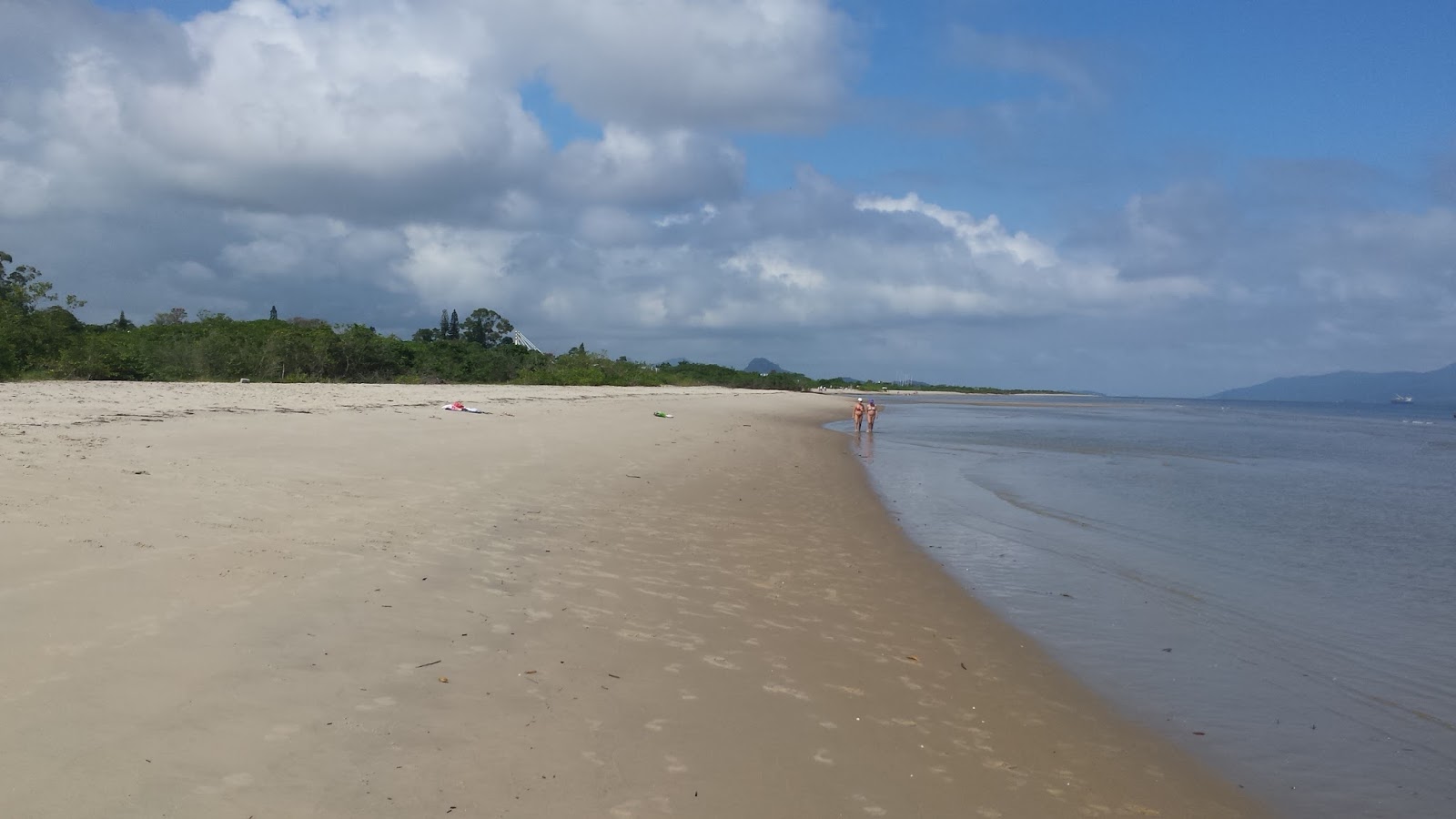
We spent the mornings at a small beach called Capri, hidden
away in a corner of the island and mostly visited by people with houses there
or members of the yacht club. Being
further away from the major tourist centres of the island, the beach was quiet
all day long with several groups – mostly families – scattered along the sand
with plenty space in between. The sea
was shallow and the warm, gentle waves make the beach perfect for people with
young kids or that want to wade out a bit further to where the water is deep
enough to swim – a good few hundred meters, I reckon. From there, the only sounds are the waves,
the birds and, if you dipped your head under water, the soft hum of boat
engines being carried through the water from the port on the other side of the
bay.
Capri
If you’re not lucky enough to have a house in Capri, the
only options for lunch are to bring your own or visit the yacht club
restaurant, which is open to the public.
There really is nothing quite like having lunch looking at some of the
massive luxury yachts moored outside to make you feel poor, but there are worse
things in life than enjoying a nice, cold beer in the sunshine by the sea. After lunch, we strolled along the street to
the beach, where I spent most of the afternoon in the sea.
Eventually, it was time to go, back to the house for a quick
shower, then out to the supermarket for supplies. The owners of the house had left us some break,
butter, milk and coffee to get us started, but this would not be enough for the
long weekend, especially with the barbecue beckoning outside.
For anyone planning to go to a supermarket by the beach
during carnaval, my only advice is don’t do it!
If at all possible, stock up before you get there as the supermarket was
a scene of pandemonium. São Francisco do
Sul is a city that covers the island and between its 13 beaches, has a
population of just over 40,000, which swells massively with the influx of
visitors for carnaval. The
infrastructure can barely cope with the sudden increase and while the small
supermarket we visited is sufficient for most of the year, this week it was
woefully inadequate. Poor planning
leaves a bottleneck between the entrance of the supermarket and the beginning
of the first aisle. This aisle is where
the beer is, which I quickly discovered is one of the key products in demand,
with soft drinks taking a close second place.
After capturing our supplies (beer and guaraná) we headed to the other
busy part of the supermarket to pick up some meat for the next day’s
barbecue. Between getting stuck in
bottlenecks, hunting and hunting for sun cream (it turned out it was at every
till, but nowhere else in the shop) and endless queues, we must have spent
about an hour shopping for a weekend’s worth of supplies.
We managed to struggle our way out of the car park and onto
the main road back to our little house, thankfully against the flow of
traffic. Our friends were travelling
down that afternoon but were severely delayed by heavy carnaval traffic,
exacerbated by an accident. By the time
we were ready to go out, it was approaching midnight, but we headed out to
experience my first carnaval.
My wife had grown up spending summers in Capri and
remembered having a good time at the carnaval in Enseada, just up the road from
where we were staying. Even at that time
of night, the traffic was still heavy and all heading towards Enseada, which we
took as a good sign. I had no idea where
I would park, but in the spirit of things, I decided not to worry about it and
cross that bridge when we got there. As
we approached the town, the traffic slowed as people hunted for parking spaces
and people dressed in anything from shorts and t-shirts, through cocktail
dresses (men that is) to a surprising amount of people (again, men) wearing
nappies (for any Americans reading, nappies are diapers) crossed the road
heading towards the seafront. But for
all this, there weren’t many signs of carnaval; no parade of trio elêtricos, no
big crowds and no loud music – my Brazilian companions were baffled. Soon we came upon a train of tricycles all
linked together, covered in bright, colourful lights and – bizarrely – making
slow, winding progress along this insignificant back road that ran parallel to
the seafront. Feeling the party spirit, my
friend wound down the window and shouted in his best gringo accent, “Yeah,
carnaval Brazil! I love Brazil!” to the
cheers of the pedalling revellers on their tricycles.
Soon, we reached the end of the road and were brought around
onto Avendia Atlântica, a one-way road that runs along the seafront back the
way we can just come. It was
surprisingly easy to find a parking space (ok, it was after midnight, but it
was carnaval) and we got out our phone trying to find the carnaval of my wife’s
youth. All maps showed the road ending
where we were, leaving us to conclude that we must have found carnaval. Ok, let’s go then!
Enseada and its lackluster carnaval
We took the cooler of beer (sadly, none for me as the
driver) and walked along the seafront.
You could tell it was no ordinary night as there were random groups out
and about, but it was a strange scene.
We encountered more people as we made our way along, some in fancy
dress, some in normal summer clothes, but the most celebrations seemed to be
coming from a guy playing guitar in front of a house with a small crowd gather
round and the odd club with their own carnaval inside. We asked the most normal-looking person we
could find where the main carnaval was and she told us to carry on along the
road. Eventually we found a small stage
which was playing cheesy music to a moderate but mostly indifferent crowd. I wasn’t particularly impressed, my wife was
wondering what happened to the fun carnavals of her youth and our friends
reassured me that this wasn’t what carnaval was supposed to be. When it started raining, we decided enough
was enough, no point getting soaked standing around listening to crap music and
avoiding dog shit so we went back to the car.
My wife remembered that the centre of São Francisco do Sul
was supposed to have a carnaval parade, so we decided to give that a try. From where we were on the North East tip of
the island to the centre, which is on the western side, it was a half hour
drive with a not inconsiderable number of cars going back and forth. We had to stop to allow a freight train
across a level crossing before reaching the centre of São Francisco do Sul,
which appeared to be deserted. As one of
the oldest cities in Brazil, the streets of São Francisco do Sul are cobbled,
narrow and winding, with a very oppressive atmosphere in the middle of the
night. The only signs of life were
occasional groups of shifty characters walking along the streets and a
patrolling police car. That was it, get
me the hell out of the city and back to the house, at least we could drink some
beers and watch carnaval on tv! We were
getting a bit hungry, especially our friends, who had barely eaten since
lunchtime, so we tried to find a bar or snack shop that was open. We found one place that was packed and looked
promising, but the owner told us in no uncertain terms that it was closed. In a last ditch effort, we found a place on
the other side of the road where we could eat and see what carnaval was
supposed to be on the small tv in the corner.
I did genuinely enjoy my first night of carnaval, but I can only
attribute that to the company and the laughs we shared about the carnaval de
cocô (dog-shit carnaval.)
Prainha
The next morning, we had a quick breakfast and headed to the
beach at Capri for a morning of relaxation.
We all joked about how back the carnaval was the night before, but I
think in reality we were all a bit fed up.
It was cloudy at the beach and threatened rain, but it was warm and the
sea was inviting. After lunch, my wife
was determined to find the carnaval she remembered and got a message from
another friend that had travelled down for the whole holiday which reinforced
our belief that we must have gone to the wrong place. Looking again at the map of the island, we
could see that after a headland to the East of Enseada, there was a beach
running southwards down the island, Prainha.
This seemed familiar to my wife so we decided to try it, we must be able
to find something!
There was no parking by the beach, so we parked in a side
street. There were numerous coaches
parked in the streets from all over the South of Brazil, as well as from
Argentina and a steady stream of people were heading to the beach. When we turned the corner, we could see that
we had finally come to the right place.
Avenida Brasilia, the road that ran along the sea front was closed to
traffic people were enjoying carnaval however they liked; on the beach, playing
in the waves, further out at sea, surfers were waiting for the big waves and
all along the street people were talking, singing, dancing and drinking.
There was still the mixture of clothing, between regular
summer clothes and people in fancy dress; before long, it no longer seems
strange to see a group of men wearing nappies!
The atmosphere was very relaxed and just seemed like several parties all
mixed into one enormous party with everyone out to have a good time. Some people arrived in groups and stayed
around a cooler of beer and stayed where they were, others filled the bars and
restaurants along the beach, others went to a club that was holding its own
carnaval and others had joined one of several blocos carnavelescos (or blocos
for short.)
A bloco is an organised group where people pay a single
price to participate and celebrate carnaval as a group. Food, drink and accommodation for the
carnaval is included in this admission price and everyone wears a matching
t-shirt with the name of the bloco. We
knew our friend was in one of these groups, so we walked up the street
examining every bloco for her, having ruled out the phone as useless. Eventually, we found her and her bloco around
a cart with a flag just in front of the trio elêtrico.
A bloco following the trio elêtrico
In cities like Salvador, Bahia, the carnaval is much bigger
and more tightly organised, in Prainha, it was much more informal. In Salvador, we wouldn’t have been able to
stay with a bloco, as they would be in a closed off area; here, they let us
keep our cooler of drinks with their cart and even carried them along when the
trio elêtrico started to move. (By the
time we left, we had a lot of beer left over – our friends were driving back to
Curitiba that night and I had to drive as well – so we donated ours to the
bloco, to the surprise and delight of the group! The leader told me that next year I should
join the bloco, let’s see!)
A trio elêtrico in Salvador
Trio elêtricos are large floats, typically converted
lorries, which are designed for live music performance. Salvador is famous for its parade of trio
elêtricos, which is televised and always attracts big stars and big
crowds. The crowds are divided into
blocos and the general public, allowing everyone a chance to see the parade,
but giving preferential access to those that have paid to join a bloco. In recent years, the arrangement of blocos
and general public sections have been alternated to improve access for
everyone, although it is still seen as elitist and favouring richer people over
the poor.
Prainha had only one trio elêtrico, an old converted blue
lorry which gradually made its way from one end of the beach, along Avenida
Brasilia to the other end. The float had
a covered top deck with live musicians, although the music varied between live
covers of popular songs and recorded music.
The sides of the lower deck were given over to massive speakers ensuring
that the music carried along the street and across the beach.
Trio elêtrico, Prainha
People followed the trio elêtrico on its way along the
beach, singing, dancing and drinking each time it stopped. About halfway along, it broke down, but the
party didn’t stop. We were in front of
it at this point and there were mechanics all over the engine and one
underneath, occasionally letting out clouds of smoke until eventually, it was
fixed and the parade continued.
By the end of the evening, I was exhausted! It had been a long day and a long party, and
the weather warm and humid. Even though we were calling it a night, the party showed no sign of stopping and I have no doubt it continued several hours after we left.
No comments - carnaval!
Monday morning was mixed with happiness that we had finally
found carnaval, but mixed with sadness that it would soon be time to
leave. The sun had come out from the
clouds, so we made one last trip to Capri to say goodbye to the beach. Beneath the blue sky, the sea felt warmer
than the previous days which made it all the more difficult to leave. The previous evening had been thoroughly
enjoyable and we all agreed that I could write off the first night and call
this my first carnaval in Brazil. What
really stuck with me about it was how easy going it was and you were free to
celebrate your own way. If you wanted to
wear a swimsuit, that was fine. If you
wanted to drink beer in the streets, that was fine. If you wanted to wear a British-style police
hat and a big bushy moustache (for some reason – I wasn’t drunk, I was drinking
water!) that was fine, if you wanted to relax on the beach, that was fine, if
you wanted to wear a nappy (what…? Oh yeah, carnaval…) that was fine too. As well as all this, the music varied hugely
between pop, rock, reggae, dance and anything else to ensure that everyone was
included. What’s not to enjoy?
 You may not have realised it, but the Olympics in Rio are
coming soon. If you didn’t realise; what
cave have you been hiding in, and is there room for one more?
You may not have realised it, but the Olympics in Rio are
coming soon. If you didn’t realise; what
cave have you been hiding in, and is there room for one more?


 The procession was preceded by several police motorbikes
driving up and down to clear the road and, I assume, looking for people with
buckets, although there did not appear to be any trouble and eventually the
procession arrived. First came a small
coach carrying torch-bearers for the next stages of the relay, followed by floats
for Coca Cola (handing out small cans of coke) and Bradesco (a Brazilian bank)
and finally, the torch bearer, closely surrounded by fire fighters singing army
running songs as they passed.
The procession was preceded by several police motorbikes
driving up and down to clear the road and, I assume, looking for people with
buckets, although there did not appear to be any trouble and eventually the
procession arrived. First came a small
coach carrying torch-bearers for the next stages of the relay, followed by floats
for Coca Cola (handing out small cans of coke) and Bradesco (a Brazilian bank)
and finally, the torch bearer, closely surrounded by fire fighters singing army
running songs as they passed.