This may sound a little flippant, but it’s not too far from
the truth. According to law, ministers
may only be prosecuted by the STF (Supremo Tribunal Federal – Supreme Federal
Court) thereby offering a measure of legal immunity. In what sounds like the plot from a very
poorly written soap opera, this is being exploited to prevent ex-president Luíz
Inácio Lula da Silva (commonly known as Lula) from being prosecuted in the LavaJato investigation into corruption.
A small version of the inflatable caricatures of Lula
On 4th March 2016, Lula was detained for questioning
by Federal Police over suspicions of money laundering. Due to the depth of corruption in upper
levels of Petrobras and PT (the Worker’s Party, founded by Lula) many people in
Brazil have long suspected that Lula must have been involved in corruption or
at the very least have been aware and done nothing, so his questioning came as
no surprise to many people, and many anti-corruption protests are characterised
by large inflatable caricatures of Lula wearing convict clothes.
On Friday 11th March, it was announced that
prosecutors were seeking the arrest of Lula in relation to charges of fraud and
money laundering. At around the same
time, it because apparent that PT was planning to make Lula a minister to protect
him from prosecution by Judge Sérgio Moro, the leading investigator of Operação
Lava Jato.
On Tuesday 15th March, following massive protests on Sunday 13th, Lula flew to Brasilia for
talks with president Dilma which were completed on Wednesday 16th
March. It was announced that chief of
staff, Jaques Wagner, would stand down with “greatness and selflessness on the
day of his birthday” to cede his post to Lula.
Some media outlets suggest that the purpose of this is to help protect
president Dilma from impeachment proceedings and Dilma herself claims that the
appointment is to start the economic recovery, but the timing of the decision
and announcement is completely transparent: to protect Lula from prosecution as
part of Lava Jato.
Sérgio Moro, Federal Judge in charge
of Operação Lava Jato
Within hours of the move, Judge Sérgio Moro released phone
recordings that suggest, as was already widely suspected, that Lula’s appointment
is to prevent his arrest. In the
recording, Dilma offered to send Lula a copy of his appointment “in case of
necessity” – where the only conceivable occasion where this document would be
necessary would be an attempted arrest.
Dilma has now said that she will refer the judge to the Supreme Court
for political interference, a move that, to me at least, sounds a lot like “I’m
telling my mummy on you.” There was
anger in Congress with opposition leaders accusing Dilma of breaching the constitution,
chanting “resign, resign.”
...and for Lula
Protestors against Lula...
Of course, the anger was not contained to Congress as all
this led to wide-spread protest across the country on Wednesday evening. In every major city, people were in the
streets wearing green and yellow, waving flags.
In São Paulo, protestors in Avenida Paulista, the principal avenue of
the city, blocked traffic in both directions.
The police estimated that there were 5,000 protestors by 8:45pm and by
the end of the night, this number has risen to 70,000. In Brasilia, around 2,000 people protested at
the presidential palace singing the national anthem. In São Bernardo do Campo 200 protestors
gathered outside Lula’s house, while a separate group of PT supporters also “protested.” Given that Lula was being protected, it’s
hard to see exactly what they were protesting – simply showing support for Lula
by contributing to the noise that would keep him from sleeping! To me, this form of demonstration to support
the government seems reminiscent of demonstrations of support help under
dictatorships, such as in Iraq and Libya.
Protestors in Brasilia. The banner reads "we are with Sérgio Moro"
The protests even spread to smaller towns, such as Pato
Branco. At around 9:30pm, around the
time of the official announcement, people around the city centre started
banging sauce pans and flashing their house lights in protest. On the streets, drivers were continually
sounding their horns. The banging
continued for an hour, while the car horns were still going until 11pm. After this, there was still the occasional
angry beep.
Social media was awash with anger at the appointment and
sadness for the state of Brazil. Many
people posted modified pictures of the Brazilian flag, sometimes showing tears,
sometimes with the colours exchanged for black with the word “luto”, Portuguese
for “mourning.” A message quickly spread
suggesting that everyone angry with Lula’s appointment should wear a black
shirt on Thursday 17th March.
Some of the posts on social media, the general themes are mourning and
fighting corruption
As an outsider, looking in on this system, I find it
entirely unbelievable that anyone under a criminal investigation could be
raised to a ministerial position within government. Regardless of whether he is guilty or
innocent, surely he should be suspended pending investigation and appear in
court to determine the facts of the matter.
If he is proven innocent, then he would be free to continue with his
life, take up any position in government and return to normal – the innocent
have nothing to hide. By making him a
minister and thus immune from prosecution, PT is implying (strongly) his guilt
and show no shame in protecting him.
Which, to my mind, raises important questions about the
motives of the party and their involvement in the Lava Jato scandal.
If Lula is innocent of the charges brought against him, then
it is baffling that he would choose a course of action that, far from clearing
his name, implies guilt. If he is
guilty, then he’s (figuratively) just got away with murder.
This is one of the hardest posts for me to write, partly due
to the complexity and enormous scale of the problem here but also because this
is Brazil’s single biggest problem and has the potential to bring the country
to its knees – indeed, it is already coming close to that. I imagined writing a post about this someday
– preferably once I had really got to grips with the political system here and
my Portuguese was good enough to understand all the subtle nuances – but
current events are guiding my hand.
Corruption - dragging the country down
Corruption is not a new problem here, it dates back to
colonial times, and doubtless came to Brazil along with the European settlers
and immigrants. It has become so endemic
that some people have come to accept it as inevitable and permanent. Sometimes, when you hear about a politician
taking bribes, or money being diverted from where it is needed most, people say
“uh, that’s just Brazil”, “all politicians are corrupt”, “what can we do about
it?”, “it’ll never change” and life
continues as normal. I think that this
is a large contributor to the “complexo vira lata” or mutt-complex, a kind of
pessimistic feeling of inferiority that some sociologists have identified in
the Brazilian collective psyche.
I am glad to say that this acceptance of corruption is
gradually changing. People are starting
to realise that when corrupt politicians embezzle money or accept bribes to
offer lucrative contracts to companies, it is their money that is being stolen,
it is their schools, hospitals and public services that are suffering, it is
their roads and infrastructure that are crumbling and going to waste. In 2013, the giant awoke and millions of
Brazilians from all over the country took to the streets to protest against the
corruption that was surrounding preparations for the 2014 World Cup – an event
that was supposed to be a showcase for this football-loving country. Stadium construction was slow, new roads and
railway lines that had been promised and paid for were not appearing (in their
place, construction sites or, in some cases, nothing at all) money was being
diverted from schools and hospitals and people had had enough. Why should they host the World Cup at such a
cost?
Operation Car Wash - uncovering more names
The latest scandal to embroil the government involves a
massive ring of corruption involving the state-owned petroleum company,
Petrobras. A low level investigation
into a car wash uncovered a huge network of corruption suspected of laundering
more that R$10 billion (US$ 2.7 billion, as of March 2016) involving the several
construction companies and politicians linked to Petrobras. The investigation, known as Operação Lava
Jato (operation car wash) has been ongoing since March 2014 and has led to the
questioning and arrest of several executives of the companies and politicians. Recently, former president Luíz Inácio Lula
da Silva (commonly known as Lula) has been questioned by the Federal Police
and, as of 11th March 2016 prosecutors were seeking his arrest on
suspicion of money laundering.
President Dilma and former Prisedent Lula
It has long been suspected that president Dilma Rousseff
(who chaired the board of Petrobras from 2003 to 2010) and former president
Lula must have been aware of this criminal activity, if not been actively
involved, which has led to protests against them and their party, PT (Partido
dos Trabalhadores – worker’s party – the party that has been in Government
since 2003) calling for her impeachment.
This was complicated further when the leader of the Chamber of Deputies
(lower house of the Congress,) who called for her impeachment, was investigated
for receiving more than US$40 million in kickbacks and bribes. The fall-out of this turned into a series of
childish accusations between politicians, essentially accusing the opposing
party of being more corrupt and hence in the wrong. In addition, the party has rallied around
Lula, attempting to make him a minister to offer him immunity from arrest.
"There will not be a coup, there will be justice"
This ill-feeling then spilled out to the supporters of the
various parties involved. A significant
proportion of the population that are fed up of this corruption have come to
associate it largely with PT, more specifically with president Dilma and former
president Lula – a popular argument is that as chair of the board of Petrobras,
Dilma must have at least been aware of the corruption, making her complicit, or
if, as she claims, she was unaware of the corruption, then an incompetent CEO
and president. Supporters of PT, on the
other hand, believe that the party has done no wrong and that the protestors
are elitist and attempting a coup
d'étatto remove PT from office. They point to allegations (proved or
otherwise) of corruption in other parties as a bizarre justification of their
support for PT. This is one of the most
perplexing issues of the whole debate – in the face of criminal investigations
by the Federal Police and Judiciary, how can these people blindly follow and
defend politicians without awaiting the conclusion of the investigations? And more to the point, how can a political
party attempt to divert a criminal investigation into one of their members? By not distancing themselves from the accused
and actively attempting to block the investigations, they only appear to be
implicating themselves.
Protest in São Paulo
On Sunday 13th March, a massive series of
protests was held across several cities in Brazil; most notably in São Paulo
and Brasilia, but in practically all major cities, even down to smaller cities
like Pato Branco. Estimates of the
number of protestors vary, with claims of between 500,000 and 1.5 million in
São Paulo and 1 million in Rio de Janeiro.
(It is practically impossible to obtain an accurate estimate as the
numbers themselves tend to be used as political propaganda.) The protestors, dressed in the green and
yellow of Brazil and waving flags, were calling for ex-president Lula’s arrest,
the impeachment of president Dilma and political reform.
In response to PT’s accusations that the impeachment being
sought and that these protests were a politicalcoup
d'état against the party, many
protestors carried banners that called for an end to corruption from all
parties, explicitly naming PT and PSDB (the largest opposition party.) Indeed when Aecio Neves, the leader of PSDB
what narrowly lost to Dilma in the 2014 election, and Geraldo Alckmin, Governor
of São Paulo state, attended the protest in São Paulo, they were booed and soon
left.
So what was the result?
The honest answer, is that I don’t know.
The Lava Jato Investigation is ongoing, prosecutors are still seeking
the arrest of Lula, PT are trying to make him a minister (thus immune to all
investigations except by the Supreme Court – this doesn’t look suspicious at
all…), social media is still full of people criticising PT, criticising PSDB,
criticising supporters of PT, criticising supporters of PSDB (assumed and
actual supporters) demanding an end to corruption, demanding more transparency… As I said at the beginning of the post,
corruption is Brazil’s single biggest problem and it won’t go away
overnight. But I, as well as a sizable
majority of Brazilians, hope that the country is on the right path; that those
involved in corruption will go to jail; that the political system will be
reformed to increase transparency and thus reduce corruption; that the economy
will improve and that this great country will finally realise its potential.
Protest in Brasilia with large inflatable Lula as a convict
I’m also G123456-7, 123.45678.90-1 and 1234567 (obviously
not my actual numbers, but you get the point.)
One of the strangest aspects of living in Brazil is how much of your
life is governed by documents and numbers.
In Britain you occasionally need your national insurance
number to work, to deal with your taxes etc and in the US you need your Social
Security number for that and to buy a phone, set up cable tv etc. The equivalent in Brazil is the CPF,
(Cadastro de Pessoas Físicas – literally Individual Registration) which is your
tax ID. You need this ID to work, pay
taxes, buy electronic goods, stay in a hotel, make a coach journey… you name
it, you probably need your CPF for it.
Some states have also set up a voluntary scheme where you give your CPF
at the till in shops and for each R$50 you send in a month, you get an
electronic ticket for a draw to potentially win a cash prize up to R$50,000
(and on special dates – whatever that means – up to R$200,000.) From what I can tell, this scheme was designed
to encourage spending and stimulate the economy. I first heard of this when I visited São
Paulo last year – I found it strange that even supermarkets were asking for CPF
– and now it has arrived in Paraná and various other states.
CPF - this used to be a card, but now, they
just send you a black and white pdf to print
After your initial registration in Brazil, applying for a
CPF is one of the first things an immigrant needs to do. I’m told that you can do this at a bank or
post office, although as my company was assisting with my documents, an
immigration consultancy company handled mine for me. This involved signing a power of attorney
form, having it notarised (Brazilian bureaucrats love notarising) and sending
it by SEDEX (fast, secure mail service) to the lawyers. As this took place over the Christmas and New
Year break, it took over a week. I since
found out that when you apply for a CPF at a bank or post office, you get your
number there and then – having the lawyers take care of it turned out to be a
waste of time and I would only advise anyone to do this if they do not speak
Portuguese and do not know anyone that speaks Portuguese and their own language
(which would make living in Brazil hard enough.)
The CPF is one of the documents used most often when living
in Brazil, the other is the RG (Registro Geral – literally General Registry)
which is the ID card required of every Brazilian which has an identifying
number (of course) a photo and thumb print as well as personal information such
as date and place of birth, parents’ names and signature. Only Brazilian citizens can have an RG,
foreign residents have an RNE (Registro Nacional de Estrangeiros, literally
National Registry of Foreigners), which is a salmon-pink card with the same
details as the RG as well date of entry into Brazil, classification (permanent
or temporary) expiry date of the
card. I should point out that RG and RNE
are not the official names of the card, but rather the identifying number
written on it. As this is the
information usually required, it’s more convenient to refer to the cards as RG
and RNE. The full names are Registro de
Identidade Civil (civil identity registry) and Cédula de Identidade de
Estrangeiro (foreigner’s identity card.)
As an immigrant in Brazil, registering for your RNE is one
of the first things you do. A
requirement of my visa (and I assume any type of immigrant visa) was that I
register with the Federal Police within 30 days of arriving in Brazil. For this, you need to take the following
documents:
RNE - ID card for foreign residents in Brazil
Passport and a copy of all of the page of the passport
Original visa application form (this is the form that was
given to you at the consulate when your visa was issued)
3 recent colour photos against a white background, size 3x4
Copy of proof of address (doesn’t need to be in your name,
but must be where you live in Brazil)
Copy of spouse’s RG and CPF (if it is a marriage visa)
Marriage certificate and “legalised” marriage certificate
(from the Brazilian consulate, you needed this to get the visa in the first
place! I wasn’t told about this by the
immigration consultants, luckily I thought to bring them along just in case)
Entry/exit card from your arrival in Brazil
Previous protocol (if you have previously applied)
At the end of the appointment, you will be given the
Registry Protocol – a slip of paper with your photo which confirms that you
have registered with the Federal Police.
Until your RNE arrives, you will need this to open a bank account, apply
for a CPF, notarise documents etc. I was
told it may take up to six months for the RNE to arrive, but mine took two
months.
But that’s not all!
CTPS - Work and Social Security Booklet
The final document you will need if you are going to work in
Brazil is the CTPS (Carteira de Trabalho e Previdência Social – work and social
security booklet.) This document is a
small booklet that looks like a passport and contains a photo, thumb print,
personal details and two more numbers (one is the number of the document, the
other is a social security number.) Any
time you start a new job, the details are written (or in my case, printed and
glued) into the booklet with details of the employer and salary. If your salary changes, then it will be
updated in the work booklet.
This booklet is issued by the Ministério do Trabalho
(ministry of labour) and you can usually apply for this at a regional agency,
which can be found in most major cities.
Foreigners, though, will need to go to a “Gerência Regional” (regional
management office) which can only be found in a few cities. As Pato Branco only has an agency, I had to go
to Cascavel, three hours away. The
documents required are:
Passport
Original and copy of the RNE protocol
Original and copy of proof of address (again, it doesn’t
need to be in your name, just the place where you will live
CPF Number
The process only took about five minutes, as my documents
were checked and entered into the computer and my photograph was taken along
with an electronic thumb print. I was
told that 10 days later, I could collect my CTPS from the regional agency in
Pato Branco. Once I had it, I sent it to
my company’s Brazilian office to enter the details of my employment.
Now all I need is my Brazilian driving licence, although I
can drive using a foreign licence for my first six months in the country. To be continued…
Carnaval is one of the most recognised of Brazilian events
around the world, yet also probably one of the most misunderstood. Everyone is familiar with pictures of samba
dancers wearing next to nothing, with large elaborate feather displays taking
part in a samba procession, but this is a very small part of the story.
This procession is actually a competition between various
samba schools, held around the country, but the most famous being in Rio de
Janeiro and another big competition in São Paulo. The different samba schools have fans as
passionate as any football team and the competition is taken very seriously –
in fact the one in São Paulo nearly always seem to end in fights when the
scores are announced!
I am far from an expert in the competition, but basically,
there is the bateria (rhythm section) which has singers and drummers that play
a catchy, repetitive song for the duration of the parade. The procession is then made up of several
participants, including the flamboyant Rainha de Bateria (Queen of the rhythm
section) that scantily dressed dancer in high heels and feathers, the Baianas
– women dancing in costumes based on the traditional dress of Bahia – and a multitude of dancers in costumes, some of whom are members of the public that pay the school for a
costume and a chance to participate.
A large part of the procession is the huge, elaborately and
creatively designed. The entire
procession and song is based on a certain theme and tells a story through the
dance, the costumes and the design of the floats.
Points are awarded in several categories and scoring is
quite complex. The timing of the
procession must be very precise as many points can be lost if the procession
reaches the finish line too early or too late.
This means that should a float break down, the school will get together
to try to push the float along without losing any time. No matter what school you support, it is
impossible to not feel sympathy when this happens with the potential to ruin a
whole year’s worth of preparation.
Although this is my first year living in Brazil, for the
last few years, I’ve been able to follow Carnaval on Globo Internacional and
it’s difficult to not get sucked in by the catchy music. One of the most memorable parades (to me) was
that of União da Ilha do Govanador in 2012 (see video below)
with the theme of Great Britain and several British characters, including
multiple Queen Elizabeths and Dukes of Edinburgh (not entirely sure how to
pluralise that!) a handful of Sherlock Holmes’, St George along with various
characters representing the British Empire.
The competition is extensively covered on tv, and
performances of the songs regularly appear during advert break in the month
preceding Carnaval along with lyrics so you can learn the lyrics of the school
you support! Absorbing though it all is,
I personally can’t stand to sit through the hours of end of samba (each school
has just over an hour) of the entire carnaval, but it is interesting to do
into.
Bonecos de Olinda
But this is only a small part of Carnaval. Every region in the country has its own style
of Carnaval, all of which is also televised, throughout the holiday.
Carnaval in Bahia is characterised by a parade of trio elêtricos,
open floats designed for live musical performances (more on that later). In Olinda, Pernambuco, a parade of giant
“Bonecos de Olinda” (literally dolls of Olinda) takes place in the historic
centre of the city and the celebration includes several musical styles, among
them Frevo – a fast style of music accompanied by acrobatic dances
incorporating small, colourful umbrellas.
For my first carnaval we went to the beach, like many others
that live inland. We went to the island
of São Francisco do Sul, in Santa Catarina and rented a small house with
friends in Ubatuba, one of the beaches along the Atlantic coast. The house was quite basic – consisting of a
kitchen/living room, a bedroom with a double bed and a bunk-bed and a bathroom
– but that’s all you need during carnaval – a bed, a roof and somewhere to have
breakfast, maybe even lunch.
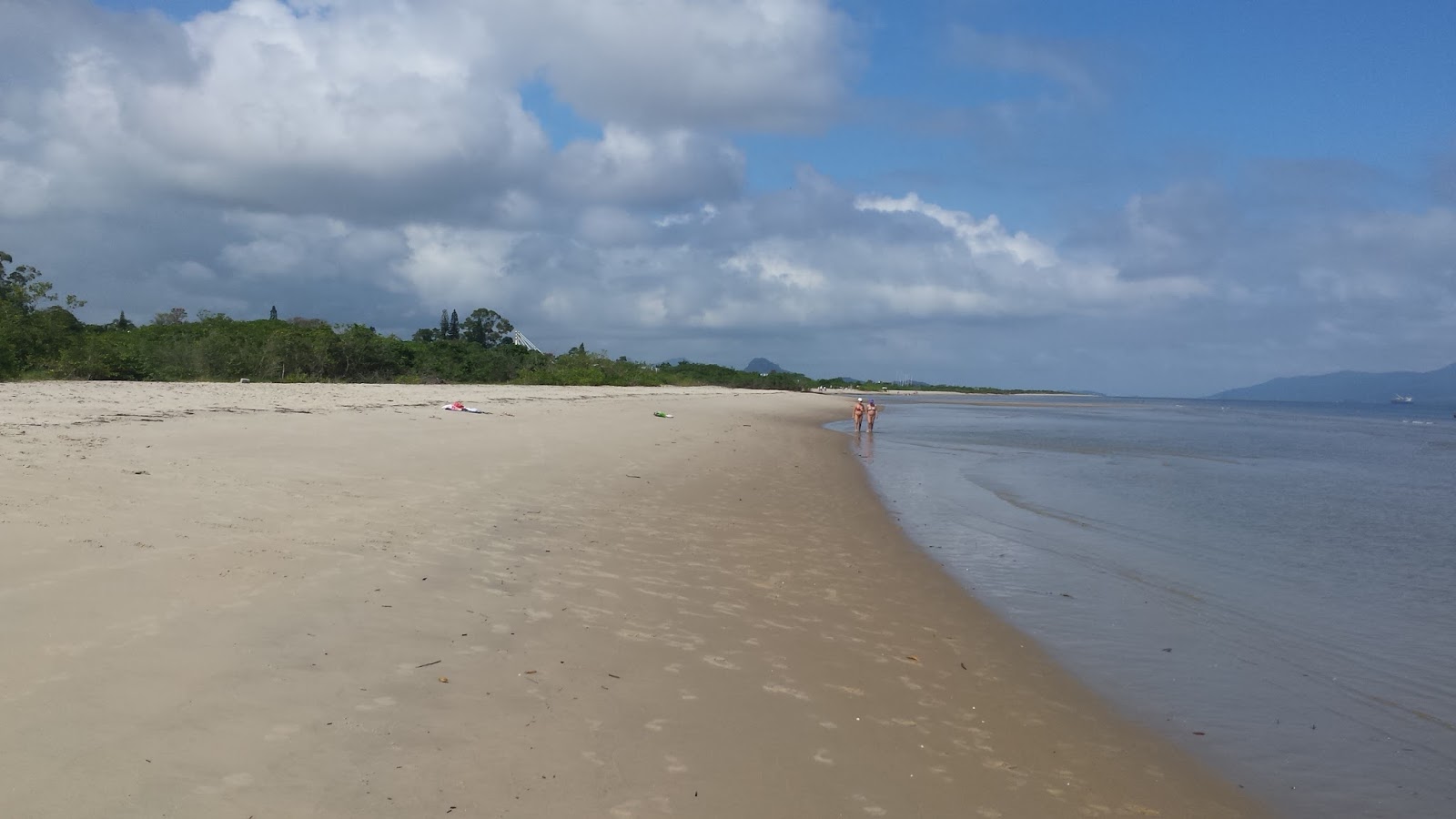
We spent the mornings at a small beach called Capri, hidden
away in a corner of the island and mostly visited by people with houses there
or members of the yacht club. Being
further away from the major tourist centres of the island, the beach was quiet
all day long with several groups – mostly families – scattered along the sand
with plenty space in between. The sea
was shallow and the warm, gentle waves make the beach perfect for people with
young kids or that want to wade out a bit further to where the water is deep
enough to swim – a good few hundred meters, I reckon. From there, the only sounds are the waves,
the birds and, if you dipped your head under water, the soft hum of boat
engines being carried through the water from the port on the other side of the
bay.
Capri
If you’re not lucky enough to have a house in Capri, the
only options for lunch are to bring your own or visit the yacht club
restaurant, which is open to the public.
There really is nothing quite like having lunch looking at some of the
massive luxury yachts moored outside to make you feel poor, but there are worse
things in life than enjoying a nice, cold beer in the sunshine by the sea. After lunch, we strolled along the street to
the beach, where I spent most of the afternoon in the sea.
Eventually, it was time to go, back to the house for a quick
shower, then out to the supermarket for supplies. The owners of the house had left us some break,
butter, milk and coffee to get us started, but this would not be enough for the
long weekend, especially with the barbecue beckoning outside.
For anyone planning to go to a supermarket by the beach
during carnaval, my only advice is don’t do it!
If at all possible, stock up before you get there as the supermarket was
a scene of pandemonium. São Francisco do
Sul is a city that covers the island and between its 13 beaches, has a
population of just over 40,000, which swells massively with the influx of
visitors for carnaval. The
infrastructure can barely cope with the sudden increase and while the small
supermarket we visited is sufficient for most of the year, this week it was
woefully inadequate. Poor planning
leaves a bottleneck between the entrance of the supermarket and the beginning
of the first aisle. This aisle is where
the beer is, which I quickly discovered is one of the key products in demand,
with soft drinks taking a close second place.
After capturing our supplies (beer and guaraná) we headed to the other
busy part of the supermarket to pick up some meat for the next day’s
barbecue. Between getting stuck in
bottlenecks, hunting and hunting for sun cream (it turned out it was at every
till, but nowhere else in the shop) and endless queues, we must have spent
about an hour shopping for a weekend’s worth of supplies.
We managed to struggle our way out of the car park and onto
the main road back to our little house, thankfully against the flow of
traffic. Our friends were travelling
down that afternoon but were severely delayed by heavy carnaval traffic,
exacerbated by an accident. By the time
we were ready to go out, it was approaching midnight, but we headed out to
experience my first carnaval.
My wife had grown up spending summers in Capri and
remembered having a good time at the carnaval in Enseada, just up the road from
where we were staying. Even at that time
of night, the traffic was still heavy and all heading towards Enseada, which we
took as a good sign. I had no idea where
I would park, but in the spirit of things, I decided not to worry about it and
cross that bridge when we got there. As
we approached the town, the traffic slowed as people hunted for parking spaces
and people dressed in anything from shorts and t-shirts, through cocktail
dresses (men that is) to a surprising amount of people (again, men) wearing
nappies (for any Americans reading, nappies are diapers) crossed the road
heading towards the seafront. But for
all this, there weren’t many signs of carnaval; no parade of trio elêtricos, no
big crowds and no loud music – my Brazilian companions were baffled. Soon we came upon a train of tricycles all
linked together, covered in bright, colourful lights and – bizarrely – making
slow, winding progress along this insignificant back road that ran parallel to
the seafront. Feeling the party spirit, my
friend wound down the window and shouted in his best gringo accent, “Yeah,
carnaval Brazil! I love Brazil!” to the
cheers of the pedalling revellers on their tricycles.
Soon, we reached the end of the road and were brought around
onto Avendia Atlântica, a one-way road that runs along the seafront back the
way we can just come. It was
surprisingly easy to find a parking space (ok, it was after midnight, but it
was carnaval) and we got out our phone trying to find the carnaval of my wife’s
youth. All maps showed the road ending
where we were, leaving us to conclude that we must have found carnaval. Ok, let’s go then!
Enseada and its lackluster carnaval
We took the cooler of beer (sadly, none for me as the
driver) and walked along the seafront.
You could tell it was no ordinary night as there were random groups out
and about, but it was a strange scene.
We encountered more people as we made our way along, some in fancy
dress, some in normal summer clothes, but the most celebrations seemed to be
coming from a guy playing guitar in front of a house with a small crowd gather
round and the odd club with their own carnaval inside. We asked the most normal-looking person we
could find where the main carnaval was and she told us to carry on along the
road. Eventually we found a small stage
which was playing cheesy music to a moderate but mostly indifferent crowd. I wasn’t particularly impressed, my wife was
wondering what happened to the fun carnavals of her youth and our friends
reassured me that this wasn’t what carnaval was supposed to be. When it started raining, we decided enough
was enough, no point getting soaked standing around listening to crap music and
avoiding dog shit so we went back to the car.
My wife remembered that the centre of São Francisco do Sul
was supposed to have a carnaval parade, so we decided to give that a try. From where we were on the North East tip of
the island to the centre, which is on the western side, it was a half hour
drive with a not inconsiderable number of cars going back and forth. We had to stop to allow a freight train
across a level crossing before reaching the centre of São Francisco do Sul,
which appeared to be deserted. As one of
the oldest cities in Brazil, the streets of São Francisco do Sul are cobbled,
narrow and winding, with a very oppressive atmosphere in the middle of the
night. The only signs of life were
occasional groups of shifty characters walking along the streets and a
patrolling police car. That was it, get
me the hell out of the city and back to the house, at least we could drink some
beers and watch carnaval on tv! We were
getting a bit hungry, especially our friends, who had barely eaten since
lunchtime, so we tried to find a bar or snack shop that was open. We found one place that was packed and looked
promising, but the owner told us in no uncertain terms that it was closed. In a last ditch effort, we found a place on
the other side of the road where we could eat and see what carnaval was
supposed to be on the small tv in the corner.
I did genuinely enjoy my first night of carnaval, but I can only
attribute that to the company and the laughs we shared about the carnaval de
cocô (dog-shit carnaval.)
Prainha
The next morning, we had a quick breakfast and headed to the
beach at Capri for a morning of relaxation.
We all joked about how back the carnaval was the night before, but I
think in reality we were all a bit fed up.
It was cloudy at the beach and threatened rain, but it was warm and the
sea was inviting. After lunch, my wife
was determined to find the carnaval she remembered and got a message from
another friend that had travelled down for the whole holiday which reinforced
our belief that we must have gone to the wrong place. Looking again at the map of the island, we
could see that after a headland to the East of Enseada, there was a beach
running southwards down the island, Prainha.
This seemed familiar to my wife so we decided to try it, we must be able
to find something!
There was no parking by the beach, so we parked in a side
street. There were numerous coaches
parked in the streets from all over the South of Brazil, as well as from
Argentina and a steady stream of people were heading to the beach. When we turned the corner, we could see that
we had finally come to the right place.
Avenida Brasilia, the road that ran along the sea front was closed to
traffic people were enjoying carnaval however they liked; on the beach, playing
in the waves, further out at sea, surfers were waiting for the big waves and
all along the street people were talking, singing, dancing and drinking.
There was still the mixture of clothing, between regular
summer clothes and people in fancy dress; before long, it no longer seems
strange to see a group of men wearing nappies!
The atmosphere was very relaxed and just seemed like several parties all
mixed into one enormous party with everyone out to have a good time. Some people arrived in groups and stayed
around a cooler of beer and stayed where they were, others filled the bars and
restaurants along the beach, others went to a club that was holding its own
carnaval and others had joined one of several blocos carnavelescos (or blocos
for short.)
A bloco is an organised group where people pay a single
price to participate and celebrate carnaval as a group. Food, drink and accommodation for the
carnaval is included in this admission price and everyone wears a matching
t-shirt with the name of the bloco. We
knew our friend was in one of these groups, so we walked up the street
examining every bloco for her, having ruled out the phone as useless. Eventually, we found her and her bloco around
a cart with a flag just in front of the trio elêtrico.
A bloco following the trio elêtrico
In cities like Salvador, Bahia, the carnaval is much bigger
and more tightly organised, in Prainha, it was much more informal. In Salvador, we wouldn’t have been able to
stay with a bloco, as they would be in a closed off area; here, they let us
keep our cooler of drinks with their cart and even carried them along when the
trio elêtrico started to move. (By the
time we left, we had a lot of beer left over – our friends were driving back to
Curitiba that night and I had to drive as well – so we donated ours to the
bloco, to the surprise and delight of the group! The leader told me that next year I should
join the bloco, let’s see!)
A trio elêtrico in Salvador
Trio elêtricos are large floats, typically converted
lorries, which are designed for live music performance. Salvador is famous for its parade of trio
elêtricos, which is televised and always attracts big stars and big
crowds. The crowds are divided into
blocos and the general public, allowing everyone a chance to see the parade,
but giving preferential access to those that have paid to join a bloco. In recent years, the arrangement of blocos
and general public sections have been alternated to improve access for
everyone, although it is still seen as elitist and favouring richer people over
the poor.
Prainha had only one trio elêtrico, an old converted blue
lorry which gradually made its way from one end of the beach, along Avenida
Brasilia to the other end. The float had
a covered top deck with live musicians, although the music varied between live
covers of popular songs and recorded music.
The sides of the lower deck were given over to massive speakers ensuring
that the music carried along the street and across the beach.
Trio elêtrico, Prainha
People followed the trio elêtrico on its way along the
beach, singing, dancing and drinking each time it stopped. About halfway along, it broke down, but the
party didn’t stop. We were in front of
it at this point and there were mechanics all over the engine and one
underneath, occasionally letting out clouds of smoke until eventually, it was
fixed and the parade continued.
By the end of the evening, I was exhausted! It had been a long day and a long party, and
the weather warm and humid. Even though we were calling it a night, the party showed no sign of stopping and I have no doubt it continued several hours after we left.
No comments - carnaval!
Monday morning was mixed with happiness that we had finally
found carnaval, but mixed with sadness that it would soon be time to
leave. The sun had come out from the
clouds, so we made one last trip to Capri to say goodbye to the beach. Beneath the blue sky, the sea felt warmer
than the previous days which made it all the more difficult to leave. The previous evening had been thoroughly
enjoyable and we all agreed that I could write off the first night and call
this my first carnaval in Brazil. What
really stuck with me about it was how easy going it was and you were free to
celebrate your own way. If you wanted to
wear a swimsuit, that was fine. If you
wanted to drink beer in the streets, that was fine. If you wanted to wear a British-style police
hat and a big bushy moustache (for some reason – I wasn’t drunk, I was drinking
water!) that was fine, if you wanted to relax on the beach, that was fine, if
you wanted to wear a nappy (what…? Oh yeah, carnaval…) that was fine too. As well as all this, the music varied hugely
between pop, rock, reggae, dance and anything else to ensure that everyone was
included. What’s not to enjoy?
I was never a big fan of wine. I had mostly tried white wine, usually
finding it alright, though not always to my taste. A couple of tastes of red wine left me rather
unimpressed so I came to the conclusion that wine was not my drink – stick to
beer. Move forward a few years and I was
working at a hotel bar discussing wine with a regular who was the manager of
another hotel in town. He told me that I
shouldn’t say I don’t like wine, I just don’t like the wines I had tried. It made sense to me so, after my shift had
finished, I decided to out this to the test and tried a glass of his
suggestion, a pinotage from South Africa.
It was a revelation: tasty and very easy to drink and instantly proved
his point. Based on this, I tried other
wines, learned what I liked, what I didn’t like and was able to give better
information to customers (classic excuse: not just having a drink, I’m doing
research!)
I now very much enjoy a glass of red wine (occasionally a
white), although I am far from an expert. My palate may not be the most refined,
although I know what I like, which is the most important thing. So what’s all this got to do with Brazil?
I had heard that wine is produced in Rio Grande do Sul, the
southernmost state in Brazil which was heavily populated by Italian immigrants. No one that I had spoken to had much to say
about Brazilian wine, either positive or negative – it appeared to simply not
exist and was shunned in favour of more expensive wines from Argentina and
Chile, as well as Europe, Australasia, South Africa and California. Never-the-less I decided to try a bottle from
Serra Gaúcha (this was about 7 or 8 years ago.)
It wasn’t bad, but not the greatest wine I’d ever tried.
I even tried vinho colonial, a young,
countryside wine. The colour of vinho colonial was what struck me first, a
pinkish purple closer to a bright flower than any red wine I’d ever seen. The wine itself has quite a strong flavour
which is quite sour. It is drinkable,
but not really my thing. I resigned
myself to the idea that any wine I drink here would be imported and have a
price tag to match, save for occasional trips across the border to Argentina
where I am told wine is cheaper. Once I
have my RNE (ID card for foreigners – I need this card to re-enter the country
as a resident) I’ll take a trip across to find out.
But in the spirit of trying new things which had got me into
wine in the first place, I didn’t give up.
We had a visit from my wife’s great uncle and his family and we went to
the supermarket to stock up. We decided
to buy a couple of bottles of wine so I browsed the shelves in the supermarket,
trying to decide on a Chilean or Argentinian red. A bottle of pinotage caught my eye – that
variety that got me into wines in the first place – which came from the Marcus
James winery in Serra Gaúcha. I picked
it up, along with a pinot noir from the same vineyard, and brought them home to
try.
Marcus James Pinotage from Serra
Gaúcha in Rio Grande do Sul
And the results were good!
I’m not going to go into notes of summer fruits and smokey finish and
all that stuff, but I found it to be a very tasty and very drinkable wine. Everyone at the table enjoyed the pinotage so
it was only a matter of time before the pinot noir was opened and polished off
to much the same results. I later tried
a cabernet sauvignon from the same vineyard and a merlot from Saint Germain,
both of which were very good. If there
are any wine experts reading that are disappointed by my descriptions, I invite
you to track down these wines and let me know what you think! As I said before, I’m not an expert on wines,
I just know what I like.
I don’t know whether the wine industry in Brazil has
improved over the last few years or whether the quality was always there and I
didn’t find it, but there are good Brazilian wines out there. A recent article on the magazine program
“Globo Reporter” about the health benefits of wine and pure grape juice may be
increasing the popularity of local wines, and a soap opera set around vineyards
in Rio Grande do Sul, “Além do Tempo,” has probably helped too.
“You can’t argue with the little things, it’s the little
things that make up life,” a line from the Simpsons but very true. There are a lot of little things that make me
happy living in Brazil, whether it’s the smell of the air after the rain or the
array of fresh fruits in a supermarket, going to a football match or having a barbecue with friends.
Some of these things might not be everyone’s cup of tea, some may be
just me, but they make me happy!
Fresh Fruit
It probably doesn’t come as a surprise that supermarkets in
Brazil have a good selection of fresh fruit, but what strikes me is the
smell. As you approach the fruit
section, the air is filled with the intoxicating aroma of fresh fruit, to the
extent I’ve never experienced in Britain or the US. Then you go to a dedicated fruit shop or market…
Churrasco
Barbecue (churrasco in Portuguese) is very popular in
Brazil, especially in the South. The
format varies by region, with some areas preferring steaks and smaller skewers,
while others prefer large pieces of meat, cooked over several hours and sliced
at the table. This is often accompanied
by rice, farofa (a crunchy accompaniment made with cassava flour and various
other ingredients, such as bacon, olives, egg etc), maionaise (Brazilian potato
salad) and salad. In my wife’s family at
least, this is a typical Sunday lunch.
Rain
If you told me 5 years ago that I’d be glad of rain, I’d say
you were mad. Growing up in Britain, you
take rain for granted, in fact you generally spend your time praying for a dry
day! After 4 and a half years in
California, I found myself longing for some airborne moisture and Brazil (at
least Paraná) does not disappoint! When
it gets really hot and humid, usually a nice cooling shower is on the way!
Coffee
Oh the coffee! Brazil
is the biggest coffee producer in the world, supplying about one third of the
global production and it’s good! It also
plays a large part in the culture: breakfast is called “café de manha”
(literally morning coffee) and meals are often followed by a little
cafezinho. If you go to a bank,
restaurant or rest area by the motorway, you may well see a thermos of free
coffee (although this is often already sweetened – my preference of unsweetened
coffee is seen as a bit weird here!)
Football
It will come as no surprise that the only country to have won the World Cup five times is mad about football. The year starts off slowly with the state competitions, and then moves on to the Campeonato Brasileiro, the national league. Everyone appears to have a favourite team, even people that aren't that keen on football and the atmosphere inside the stadium can't be beaten.
It might seem silly, but it feels really good to drive
through the countryside and see so much green!
After the greyish brown of California, the green grass, plants and trees
make the country seem so alive. Even in
big cities like Curitiba, there is so much green, whether it’s trees by the side
of the road, or the many parks and it’s all natural – not imported from other
regions and sustained by constant sprinklers.
Woods near Pato Branco with pinheiros standing out on the horizon
Pinheiros
Yes, more green stuff.
These trees are only found in the South of Brazil and are the state tree
of the Paraná. Their unique look lends
them a kind of charisma and seeing a stand of Pinheiros is like a welcome to
the South.
Guaraná
It comes in a green can!
This is a very Brazilian soft drink, made from the guaraná fruit and is
a more natural energy drink! Living in
Britain and the US, it was always a rare treat to find guaraná, here it is
obviously widely available, so I’m being careful to not get carried away! But it’s so good…
Coxinhas with Guaraná
Snack Foods
Brazil has many salgadinhos – little savoury snacks – such
as pasteis, coxinhas, pão de queijo etc…
I’ll write about them some other time, for now all you need to know is
that they’re bloody good!
Sweets
I know I’m taking this post down a foodie cul-de-sac, but I
can’t help it! The variety of chocolates
and sweets on offer here is great. And
that’s before you get into popular homemade sweets like brigadeiro (a chocolaty
treat made with condensed milk and cocoa powder.) I’m getting hungry…
Holidays
Brazil has loads of public holidays and the best part is
that when they land on a Tuesday, most employers allow employees to take the
Monday off, and the same with Fridays when the holiday is on a Thursday. The downside is that if a holiday falls on a
weekend, there is no day off in lieu.
Although with the extra days off, there will always be plenty of
holidays.
Comfortable Coaches
Brazil is a big country and one of the easiest ways of
getting around is by coach. There are
various levels, including conventional, executive and the more luxurious
leito. Taking an overnight leito coach
is an easy way to get where you need to be and get some sleep along the way.
Hotel Breakfast
Yes, I’m back on to food.
Most hotels have a very good spread for breakfast, including; juices,
coffee, fresh fruits, various breads and other baked goods, eggs and
yoghurts. If you leave feeling hungry,
you’re not doing it right!
Rodizio Restauarants
This a type of restaurant where waiters continually bring
around food, rather than ordering a la carte.
Most Brazilian restaurants abroad are barbecue rodizio restaurants,
where the meat is brought around on large skewers and sliced off upon request,
but there are other types, including pasta and pizza, which are both very
good. The obvious advantage is that you
can have as much or little as you like, and have the opportunity to try dishes
that you might otherwise not order. Not
to mention that it is always freshly cooked when it reaches you.
Blackout Curtains
When I sleep, I like the room to be as dark as possible,
especially if I have the chance to sleep in in the morning. What better than an impenetrable blackout
curtain to keep out that intrusive morning sunlight?
Sunlight
And now, I’ll contradict myself. Much as I like to sleep in a nice dark room,
it’s nice to have a well lit room when I’m not sleeping. The apartments I had in the US all seemed
rather dark, it’s nice to be somewhere where the sun can shine in and light up
the room. (I know this is very
subjective and depends on where you live, but it’s just another reason why I’m
happy to be here!)
It’s Summer Again!
I know it won’t last, but it’s nice to have summer, a few
weeks of winter, then summer again! Now
I need to somehow escape to Europe in August!
I’ve already told the story of the big move so I’ll fast-forward a week. I had just arrived in Curitiba after a quick trip to São Paulo for work. We had hired an estate car (or station wagon, for North Americans) which we hoped would be big enough to take our belongings back to Pato Branco. It was Thursday 17th December, the day that we had requested delivery of our belongings but there had still been no mention of a delivery or the promised details of the flight one which it would be sent. I called BraBox to find out what was going on and they told me that the shipment had passed inspection and was ready to ship – their flights from Miami to Curitiba were on Thursdays and Sundays, so they could send the three boxes (phone call: there are FOUR boxes!) on Sunday 20th with arrival on the Monday. This was no good for us with me working and Christmas fast approaching so they offered to hold the shipment in their warehouse (at no extra cost) until we were ready in mid-January, giving us time to plan.
We discovered a branch of Localiza in Pato Branco, a Brazilian car hire company, and enquired about hiring a car big enough for our shipment. Every time we thought about them, the boxes got bigger and bigger in our minds, to the point we reserved an SUV (Renault Duster) but continued to wonder whether there would be enough room.
On Tuesday 5th January, I requested the shipment to arrive on Monday 11th and was told it would arrive at 12:04 that day. I then promptly received an automatic e-mail to tell me that my order has shipped and would arrive on 7th January. Cue a quick flurry of e-mails and the shipment was rescheduled for the 11th, although it would now arrive at 13:33 (I didn’t question it, life’s too short.)
I was told to contact one of BraBox’s agents at their contact e-mail address for details on how to collect the shipment, but for the first time since my initial contact with the company, they failed to reply. Eventually, on the day we went to collect our shipment, I sent another request for information and I was called back. They had called my mother-in-law (as it was her phone number we used for the Brazilian contact) and she told them that we had gone to the airport. The subtlety that BraBrox didn’t get was that we had left on the 6-hour drive and hotel stay to get to Curitiba airport. Anyway, she proceeded to read out the address of the airport and told us to go to the airline first to get the papers and then we could collect the box, simple. We don’t need to go to a cargo facility? You just go to the airline. Ok…
So we arrived at the airport and went to the airline. By which I mean we went to the ticketing desk, at least they should know where we should go. After explaining that we were picking up a shipment that was carried by TAM (we were told LAN, but they’re all one airline, so I’ll just say TAM) from Miami, we were directed to the TAM cargo facility (I knew it!) which was directly behind the Infraero building. So, back to the car and around the airport only to find there were two Infraero buildings, although one had a red building (TAM colours) behind it which sure enough proved to be the TAM cargo centre. It was a corrugated metal building, like a small warehouse, we took a number and waited for our turn.
And this is when we were told we were in the wrong place again. We should go to the big Infraero building, which was the import centre and housed customs and various cargo offices. At the reception, we were directed to a small room where we could get information about our shipment. Good news! It has arrived! But it won’t be released until approximately 5pm, by which time it would be too late to do all the paperwork, load up the car and drive to Pato Branco, so we checked back into our hotel with plans to come back the next day. On the bright side, it enabled to see our friend’s band performing in Curitiba, so we were pretty upbeat about the situation.
The next day, ears still ringing from standing by the stage at the gig, we arrived at the airport at about 11am. This time, we went straight to the import centre and found the TAM office. We gave them some forms and R$140 ($35) for holding the shipment a day, and they gave us the original air waybill. We took this to the customs office, but the agent responsible had already gone out for lunch (it was 11:30) and wouldn’t be back until 2pm. The woman at the desk gave us a form to complete then left the form and waybill on the agent’s desk.
More red tape...
I had a teleconference for work which passed an hour, and we had a modest lunch of random-junk-food-snacks-we-had-picked-up-on-the-journey (mmm nutritious!) and returned to the customs office at 2pm. To our relief, 2pm is just the opening time for the afternoon; the agent had stamped, signed and done whatever else was necessary to authorise the forms. Next we had to go to the payment office to pay the R$35 ($9) fee.
This should be simple. We had debit cards, credit cards and plenty cash to cover the fee, but no, it could only be paid at a bank. Do you have an online banking app on your phone? You could pay it there? Umm, we don’t have any accounts in Brazil, let alone an app. It turned out there was a guy in one of the cargo companies that could make the payment online for us and we could give him the cash. Ok, done, can we have our things now please?
Now we went to the first office we had visited the day before where we registered our car and my driving licence to bring it into the cargo facility (first on paper, then we had to enter everything into computer – why we couldn’t skip the paper and do it on the computer, I don’t know and didn’t dare to ask. We were told to take the car to the loading bay in the facility where we would be called by car number plate to receive our goods.
We sat and waited while goods were delivered to other people – mostly packages of varying sizes being collected by a courier – and awaiting our turn. After a while, everyone else has left and no more packages were appearing. Growing apprehensive, we waited in the car for news and eventually, at about 2:40pm, a man came over to us. My wife got out to talk to him and I tried to read the body language: the man was clearly an official with something important to say, my wife was clearly not too happy. Our boxes had been shipped on a wooden pallet (remember the helpful guy that picked up the boxes?) and it didn’t have a certificate from the department of agriculture and we would have to go back to the bureaucracy centre to sort it out before we could collect our goods.
Of course this left us fuming. How the hell could a company like BraBox allow a shipment with a wooden pallet that was not declared? What exactly did they inspect when they inspected our shipment? Any wood entering Brazil requires a stamp on it to show that it has been treated to avoid bringing insects into the country. If tests show that the wood contained insects or hadn’t been treated, we would have to pay a fine of R$300 ($75) and wait any extra day until the wood could be treated as we would have to take it away with us. As I said, we were fuming.
But this is where we had some luck. The man that came and spoke to my wife came with us to help out. It turns out that he was the manager of the loading area and it was not his job to help us, but he did so anyway. As we passed the afternoon filling out forms, giving my wife’s various national ID numbers (CPF, RG, passport, take your pick), taking photocopies, etc, we met several people who all gradually came to hear our story. One dispatcher told us he was dealing with a similar case and that US shippers had a tendency to just send anything and to hell with the consequences (I don’t know whether he was exaggerating, but he wasn’t happy about it!) and he offered to help in any way he could. Various other despatchers also offered to help and by the time we left, we had the feeling that the entire building new our story!
Eventually, we had gathered all the documents and paperwork and just needed to wait for the wood to be inspected. After some time, we were told that that they wanted to inspect the contents as well, to ensure there wasn’t anything else that could be a problem. They wanted to know the contents of the box and it became apparent that the detailed list I had given to BraBox hadn’t been included in the shipment. They didn’t even have the copy of the Atestado de Residência that we had sent BraBox. We were given a visitors pass and taken through a metal detector to witness the boxes being unpacked and checked. While this was going on, all we could think about was the effort that went into packing the boxes, the small amount of effort required to remove things from the boxes and how the hell they would manage to repack them. On the bright side, we had moments of relief as we saw items that we thought we had missed being removed: my squash racquets, various books some shoes…
Eventually, the official from the Ministry of Agriculture was satisfied with our shipment and agreed to release it to us. My wife went with her to complete the paperwork while I remained to watch the boxes being repacked. Three of the boxes were repacked ok, but the fourth ended up a couple of inches taller with extra cardboard needed to close it. Finally, the boxes were loaded onto the pallet and taken off to the loading bay while I went to re-register my car and driving licence.
By the time our boxes were finally brought out to the car, it was 5:30 – we had spent almost three hours dealing with bureaucracy over that wooden pallet, all because someone had tried to be helpful in California and BraBox hadn’t done their job in inspecting the cargo. In addition to this, we had wasted an extra day because we hadn’t been fully informed of all the steps needed to release our shipment. In the end, it turns out it should have been simpler, if the Atestado de Residência had been sent, as it should have been.
I have some advice for anyone that finds themselves in this situation, specifically anyone moving to Brazil.
For Brazilians, as soon as you leave Brazil, ensure that you have something in your name which can be used as proof of residency if you move back to Brazil. Phone bills, electricity bills etc should suffice. Otherwise you may end up paying taxes on whatever you bring back.
Unless you have enough possessions to fill a container, don’t bother shipping your belongings, all the bureaucracy and hassle you have to go through means that it isn’t worth it.
If you do ship anything, shop around. BraBox seemed very good up until the point when the boxes left Miami, after that they seemed to just wash their hands of it.
Look carefully at the cost of shipping. It might work out cheaper (or at least similar) to pay for an extra suitcase instead of shipping a smaller box of clothes
If you can’t sell all your furniture, it is worth donating it to the Salvation Army. As well as being able to do some good, it counts as a tax deductible charitable donation (at least in the US.) What’s more, they’re bring a truck to your house and cart it all away for you.
Finally, a message for any Brazilians that complain about their country: how the people are corrupt and no one helps each other. I’ve never understood how such people can have so negative a view of their country. While the bureaucracy involved in collecting our boxes was stifling and constricting, this was no worse than in any other country – I’ve had to deal with international shipping at work and it is always a minefield, without fail. The difference here was that people were able and willing to help. The manager of the loading area didn’t need to help with our paperwork. The other people from his department didn’t need to help with photocopying, identifying the regulations, finding who we needed to talk to etc. I’ve been in similar situations elsewhere where nobody helps, “sorry mate, more than my job’s worth.”
Then there are the dispatchers that heard our story and offered to help if they could.
Then there are the numerous officials that we had to talk to who were friendly, courteous and helpful – unlike in the US where you are made to feel in the wrong or treated like a criminal if you want to do anything so heinous as to enter the country!
Then there’s the guy that took our pallet for us. We were told that we had to take the pallet with us, they couldn’t keep it (though they could break it up for us to make it more manageable.) This guy had been around the cargo centre most of the day too and had heard our story and offered to take it in his truck. Not only that, he also took away the packaging when we opened the boxes to shove stuff in the car.
This whole experience was long, confusing and tiring, but it could have been a hell of a lot worse if it hadn’t been for all these people selflessly going out of their way to help us. If nothing else, this experienced served to reinforce the reasons why I love Brazil.